plant lover, cookie monster, shoe fiend
20988 stories
·
20 followers

Opinion: Medical school should start after students take the Step 1 exam

1 Share

This article is the first in a new First Opinion series on redesigning medical school.

There are more than 150 medical schools across the United States, and although each has a unique approach to medical education, all must grapple with certain challenges. Attendance at in-person lectures and learning sessions hovers around 50% across the country. Students increasingly rely on expensive commercial resources to prepare for their board exams, much to the dismay of their faculty. Meanwhile, students are taking on increasing amounts of debt to finance their four years of medical school.

Read the rest…


Read the whole story
sarcozona
9 minutes ago
reply
Epiphyte City
Share this story
Delete

STAT+: Versant, Lilly put $100 million behind new startup aimed at solving one of gene therapy’s thorniest issues

1 Share

Versant Ventures, Eli Lilly, and a handful of other investors announced Monday that they have poured $100 million into a new startup devoted to solving a gene therapy challenge that has ensnared many well-funded academics and biotechs before it.

The company, called Seawolf Therapeutics, is trying to deliver genes to patients without the use of viruses. In addition to the $100 million fundraising, Sanofi has also inked a partnership with the company.

Viruses have proven to be powerful gene delivery drones in several rare diseases, and they are being tested in hundreds of trials. But they come with drawbacks. A patient can only ever receive a single dose, after which they develop antibodies against the virus. And at high doses the treatments can have serious side effects.

Continue to STAT+ to read the full story…


Read the whole story
sarcozona
13 minutes ago
reply
Epiphyte City
Share this story
Delete

Op-Ed: Canadians are missing from Canada’s national security plan

1 Share
To be effective, Canada’s new national security plan must learn from the Canadians who know transnational repression, terrorism and mass violence firsthand
Read the whole story
sarcozona
22 minutes ago
reply
Epiphyte City
Share this story
Delete

‘My classroom was 30C. No one was learning. Then I started to feel dizzy’ – This is climate breakdown

1 Comment

As a UK heatwave intensified in early summer this year, the health impacts began to worsen. This is Gill’s story

Location: London, UK

Disaster: UK heatwave, 2026

Gill (not her real name), 43, is a teacher in London. In 2026, during the hottest summer on record, she suffered a seizure after experiencing heat exhaustion while teaching. The heatwave was made worse by the climate crisis.

Continue reading...

Read the whole story
sarcozona
1 day ago
reply
When i was in middle school, we regularly had days where the teachers told us to put our heads down and rest because it was too hot to teach, where you couldn’t hold a pencil because you were sweating so badly, sweat dripped off of students and puddled on the floor around our chairs. It was the rural south and starting school in August was novel enough the adults still complained about it. There’s a new middle school now, with air conditioning, but i wonder about students in even poorer places and how they’re coping with the new climate.

All these horrible impacts of climate change are just more widespread versions of things that have already happened. We should have acted then.
Epiphyte City
Share this story
Delete

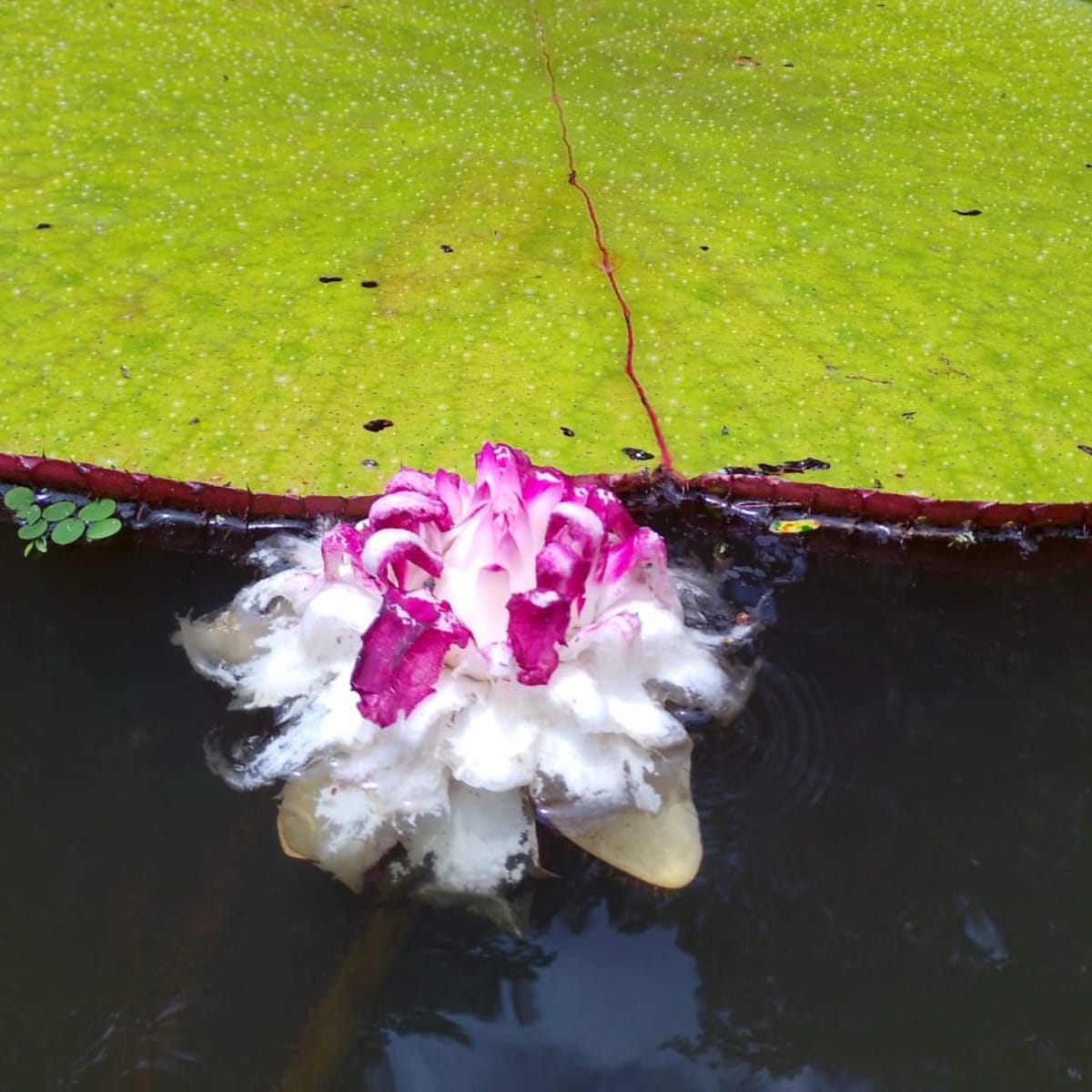
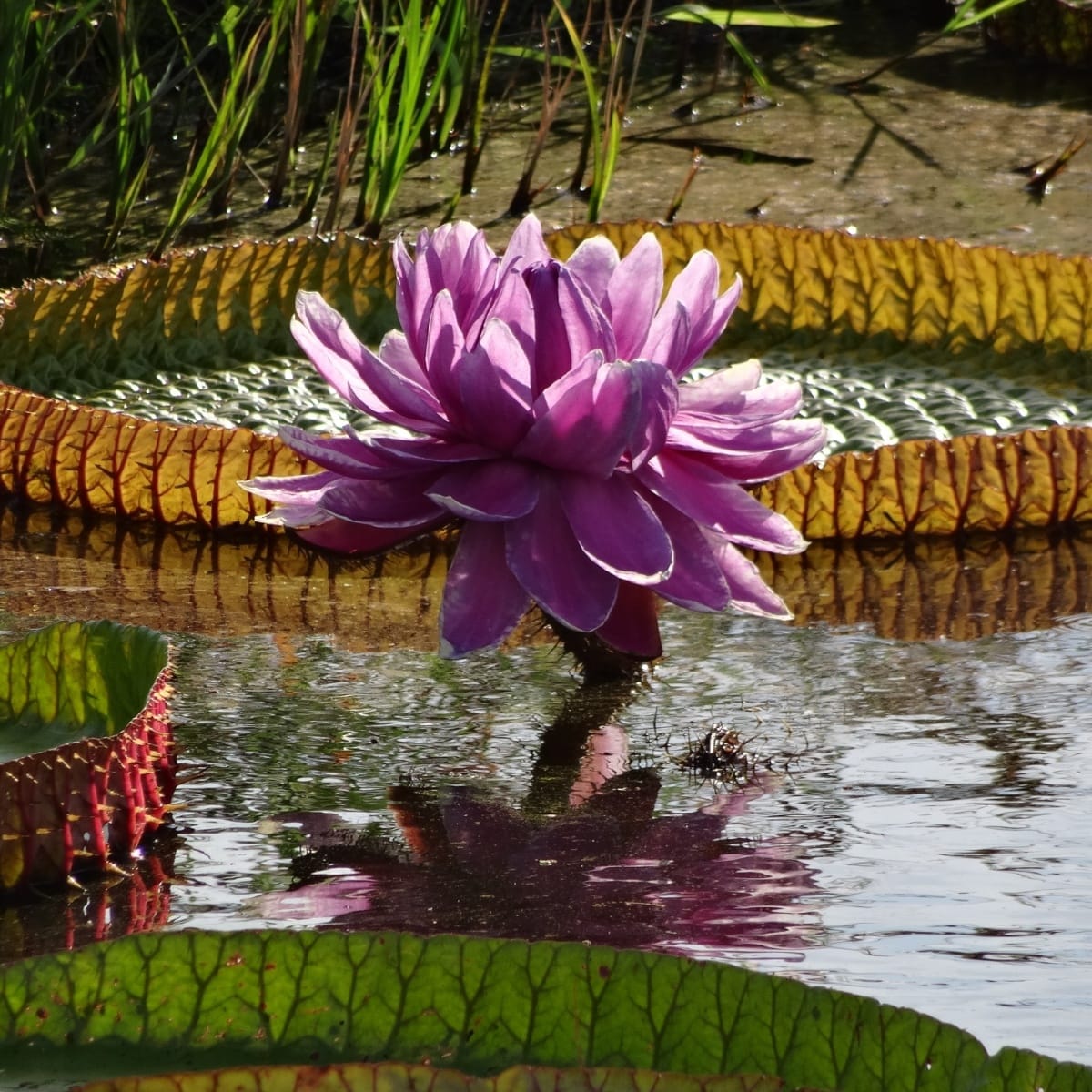
*Victoria colombiana* : A Giant Waterlily Hiding in Plain Sight

1 Share
*Victoria colombiana* : A Giant Waterlily Hiding in Plain Sight

Imagine scrolling through Instagram and coming across a plant that turns out to be a species unknown to science. That is precisely how the story of this week's plant, Victoria colombiana, began!

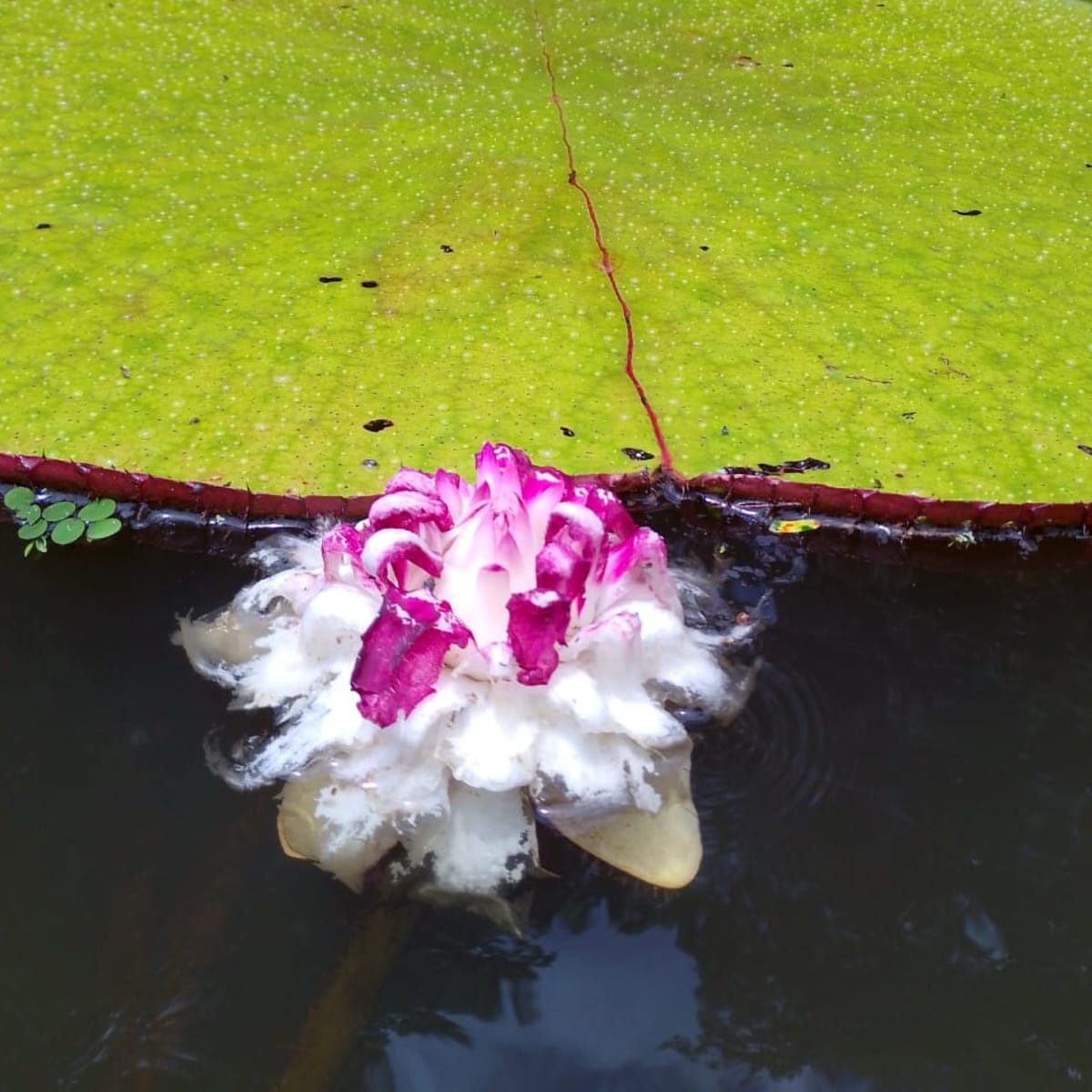
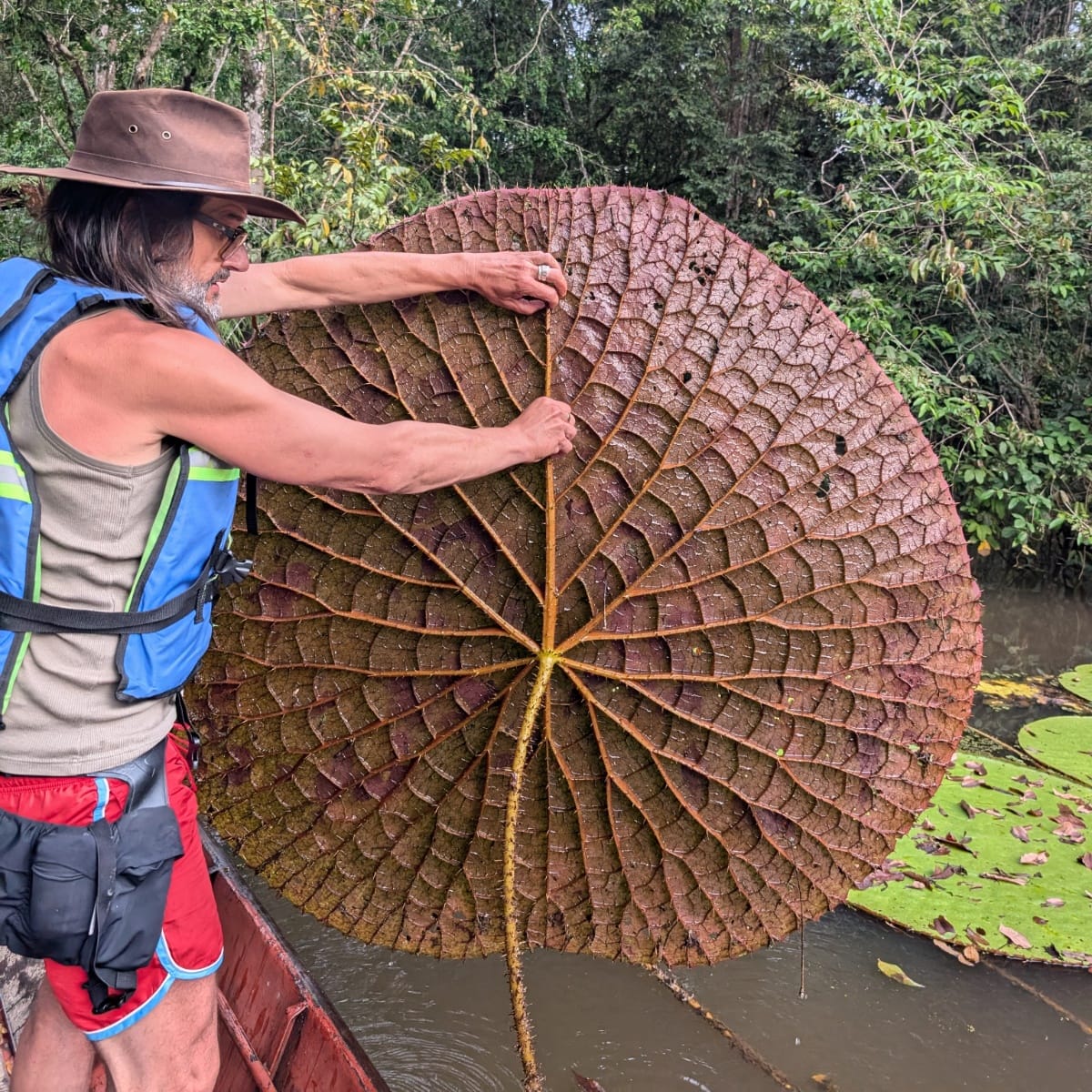
Victoria is a genus of aquatic plants belonging to the waterlily family (Nymphaeaceae), famous for producing some of the largest floating leaves in the plant kingdom, sometimes exceeding three metres in diameter. These gigantic leaves are supported by a remarkable network of ribs on their underside, which also bears numerous sharp prickles. Their flowers are equally fascinating: they open white on the first night and turn pink on the second, attracting beetles that help with pollination.

*Victoria colombiana* : A Giant Waterlily Hiding in Plain Sight
Carlos Magdalena holding a Victoria colombiana leaf. In this picture, it is easy to appreciate the ribs on the underside of the leaf. Photo by Mauricio Bernal.

In 2021, Carlos Magdalena —a waterlily specialist at the Royal Botanic Gardens, Kew, famously known as the Plant Messiah— came across Instagram photographs taken by Jeremiah Haris of a giant waterlily growing in the region of Inírida, in eastern Colombia, near the borders of Venezuela and Brazil. Although the plant had initially been identified as Victoria amazonica, something about the pictures caught his attention: the waterlily was growing somewhere no Victoria species had previously been recorded.

After spotting the Instagram photographs, Magdalena began exploring satellite images of the region and found what appeared to be giant waterlily leaves floating in several lagoons. He then joined forces with researchers from Bogotá's botanical garden and members of local Indigenous communities to organise an expedition in July 2024. However, after five days exploring the flooded forests, the team had found only two individuals, neither of which was flowering. Without flowers, they lacked the material needed to formally describe the species, and their return flight was fast approaching.

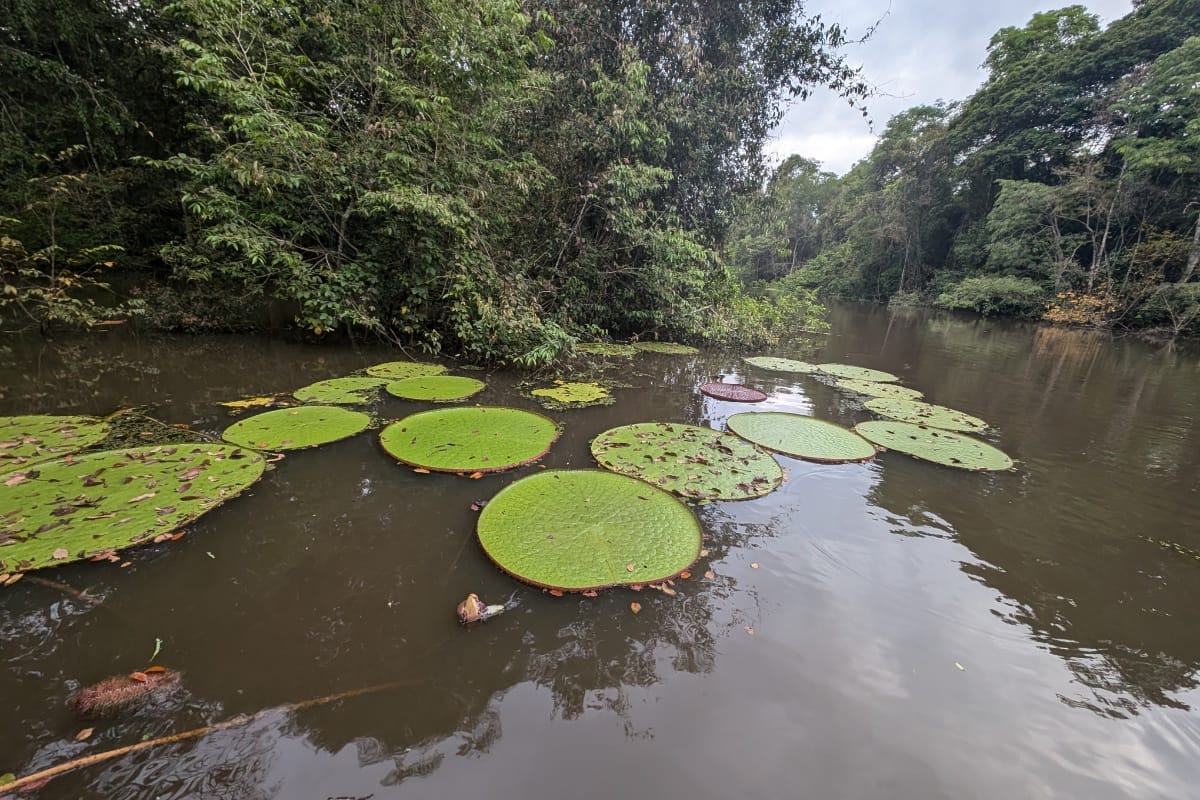
*Victoria colombiana* : A Giant Waterlily Hiding in Plain Sight
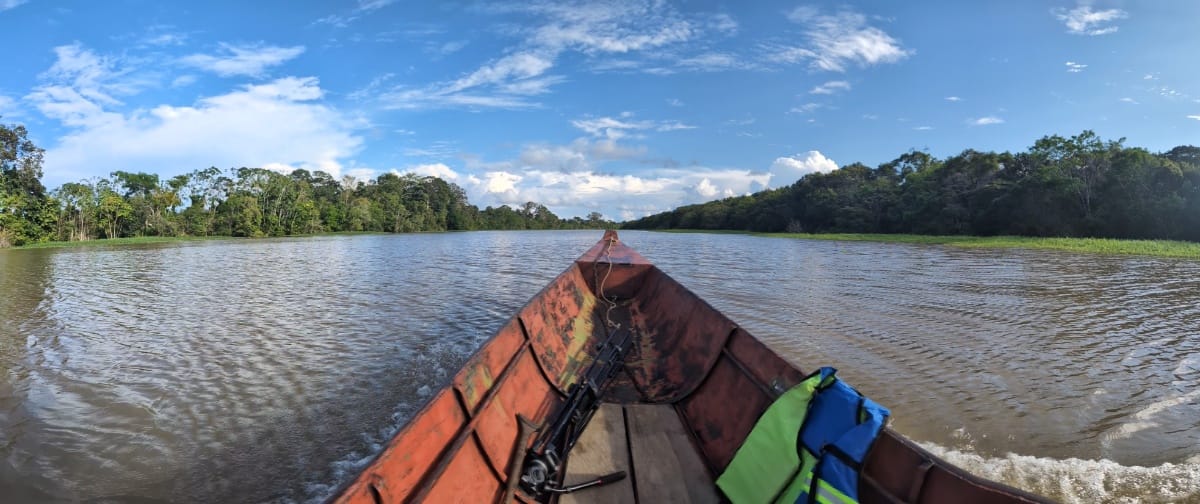
Inírida's riverine landscape. Photo by Carlos Magdalena.

Just when everything seemed lost, something extraordinary happened. At 11 pm, on the night before their flight home, Magdalena shared his frustration with Gustavo Melo, their boatman and a member of the Indigenous Tucano community. To everyone's surprise, Melo knew exactly where to find more plants! So, at 1 am, the team ventured into the flooded forest in complete darkness, trusting Melo's knowledge of the region to guide them. Shortly before sunrise, they reached a small lake where five additional waterlilies were growing, including one in flower! The team finally had the specimens they needed and even managed to catch their flight back to Bogotá. You can read the full account of this remarkable expedition in Kew's announcement.

*Victoria colombiana* : A Giant Waterlily Hiding in Plain Sight
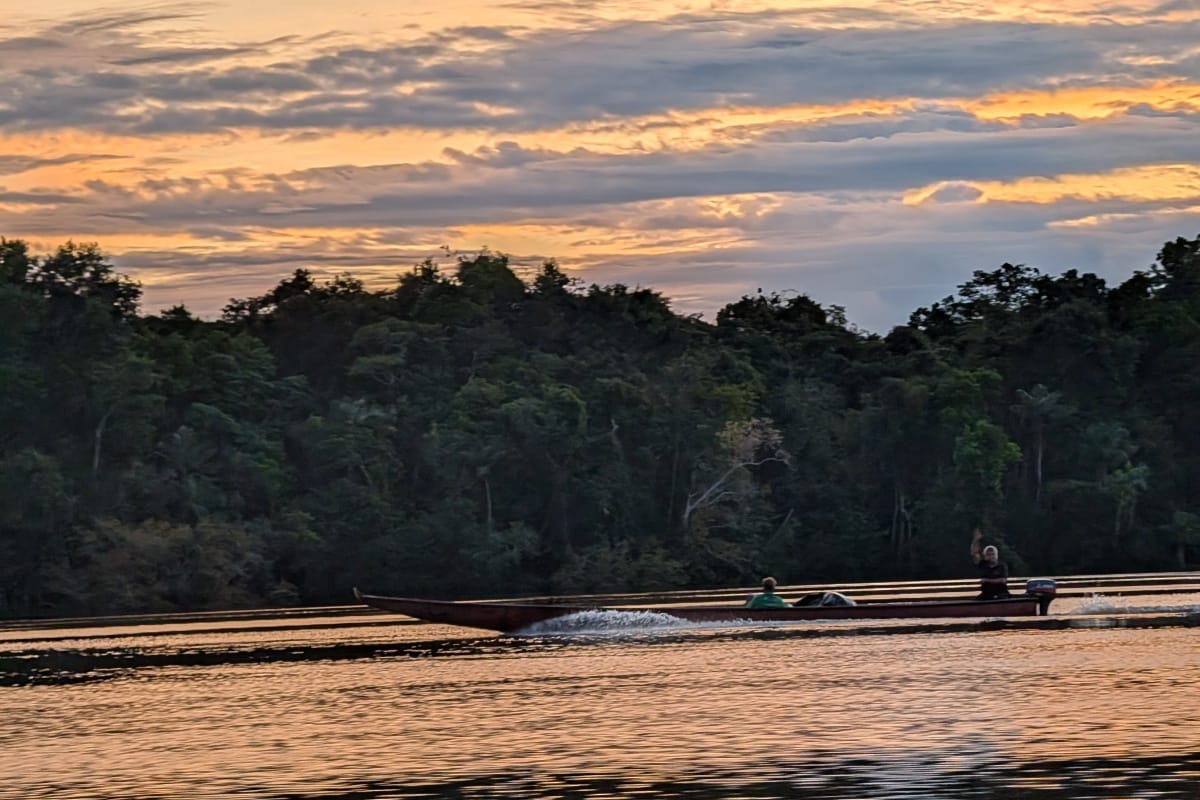
Inirida's riverine landscape at sunrise. Photo by Carlos Magdalena.

So, what makes Victoria colombiana different from its relatives? Although it closely resembles Victoria amazonica, it has several distinctive features. Its flowers have shorter, more densely packed prickles that are surprisingly flexible, while its ovary has a somewhat square outline rather than the rounded shape found in Victoria amazonica. These differences, together with its geographical distribution, led researchers to describe it as a new species in a study published last month.

However, the discovery raises another question: how could such an enormous plant have gone unnoticed by scientists for so long? After all, its leaves can reach around two metres across, making them visible even in satellite photographs! One explanation is that these plants inhabit remote lagoons within seasonally flooded forests, where accessing populations can be challenging. Moreover, researchers found that the leaves were much easier to spot in satellite images taken when water levels were low, providing an additional challenge for anyone trying to locate them.

Perhaps the most intriguing aspect of this discovery is what it tells us about the evolution of giant waterlilies. Researchers found that different Victoria species tend to occur in separate river basins across South America. Because their seeds cannot survive drying out and are thought to disperse mainly through rivers and floodwaters, changes in river courses and the isolation of river basins over millions of years may have contributed to the evolution of different species. In other words, the history of these magnificent plants may be closely linked to the history of South America's rivers!

*Victoria colombiana* : A Giant Waterlily Hiding in Plain Sight
Victoria colombiana leaf pads on a river in Inírida, Colombia. Photo by Carlos Magdalena.

Sadly, the story also has a worrying side. Researchers at Kew estimate that only 30–50 individuals of Victoria colombiana may remain in the wild, although further surveys are needed to establish its actual population size. Conservation initiatives involving Colombian botanical gardens and Indigenous communities could therefore play an essential role in protecting this newly recognised species.

To me, Victoria colombiana is a wonderful reminder that botanical discoveries can begin in the most unexpected places, even on social media! However, recognising this species took much more than an Instagram photograph: it required satellite imagery, fieldwork and the knowledge of people who were already familiar with these plants and their environment. And if a plant large enough to be spotted from space remained unrecognised by science until now, imagine how many more botanical surprises might still be waiting for us!


Cover picture: Victoria colombiana bud by Nilo Rodriguez

Read the whole story
sarcozona
1 day ago
reply
Epiphyte City
Share this story
Delete

What the Logan Circle Shooter Told Me - The Washington Sun

2 Comments

Matt Lambert, a former emergency room physician and health care technology executive, shot five people and then himself on Thursday in D.C., apparently motivated by a bitter, ongoing and all-consuming legal dispute with the Metropole Condominium Association and the building’s property manager.

The back-and-forth had been dragging on for more than a year, draining his retirement savings and fueling a deepening desperation.

Just under a year ago, I spoke to him about it. Lambert reached out to me in late 2025 when I was a reporter at The Washington Post, pitching a story about how his million-dollar Logan Circle penthouse had been rendered unlivable. I continued reporting the story into the new year, but the article was abandoned when I was laid off from the Post in early 2026.

In a series of interviews in late November and December 2025 — including two visits inside his gutted penthouse at the Metropole on 15th Street Northwest — Lambert described how a dispute over severe water leaks and black mold had turned into “psychological warfare” between himself, building manager James Stuart, the management company EJF Real Estate Services and their insurance defense attorneys.

“It’s affected every part of my life — my sleep, dietary habits,” Lambert told me in December. “I pride myself on my resilience, and I’ve been kind of surprised at how much it has been affected.”

On Thursday, D.C. police said, Lambert shot and killed Stuart at the VIDA Fitness Center located on the ground floor of the building in a targeted attack just before 8 a.m., then shot four more people in the vicinity and barricaded himself in his apartment before shooting and killing himself. Of the other four people who were shot, one was in critical condition, while three others had non-life-threatening injuries.

While at no point in the reporting process did Lambert give any indication he would resort to violence, he did frequently use intense, combative language — and at one point, his frustration bled into what at the time felt like dark humor. During a December visit with a neighbor, Lambert criticized the condo association’s legal strategy by making an offhand reference to Luigi Mangione, the suspect in the 2024 shooting death of UnitedHealthcare’s CEO who is accused of inscribing “delay, deny, depose” on his ammunition.

“What are they called? Delay, deny, defend … the Luigi three?” Lambert said.

Lambert, who bought the $1.1 million top-floor unit in 2016, had recently put the penthouse on the market with plans to relocate to New York. But he said the conflict trapped him in D.C., beginning after a building facade rehabilitation that ran from April 2023 to August 2024. While the project was underway, he said, water began running down the interior of his windows and wetting his floors after rainstorms — with cracks, peeling paint and visible mold spreading across his walls once crews finished work on his corner in August 2024. When he hired independent testers in October 2024 to show Stuart and contractors evidence of widespread moisture and airborne mold, Lambert said, the meeting ended abruptly.

According to Lambert, when his attorney asked Stuart whether he could smell the mold, Stuart replied that the apartment “smelled like cologne,” walked out and turned the matter over to the building’s lawyers.

Because my reporting on the dispute was not completed at the time, I was never able to present Lambert’s allegations to Stuart or EJF Real Estate Services to get their perspective. The Washington Sun was unable to reach the management firm earlier Thursday.

In November 2024, Lambert said, he paid $12,000 out of his own pocket to strip his apartment down to the metal studs and subflooring, uncovering floor-to-ceiling black mold. When the building’s engineers blamed the moisture on Lambert’s own appliances, he said he went six months without using his shower, heat or dryer — instead showering downstairs at VIDA Fitness, and heating his unit solely with his fireplace — to try to prove them wrong.

In March 2025, Lambert sued the Metropole Condominium Association in D.C. Superior Court, accusing the association of negligence, breach of fiduciary duty and nuisance over what he alleged were botched renovations and rebuffed repair requests. The association denied responsibility but lost a bid to have the case thrown out last year, court records show. When leaks persisted after rainstorms, Lambert said, the building’s defense counsel pivoted to blaming humidity from VIDA Fitness’s industrial dryer vents, which ran behind his unit, and moved to pull the gym into the lawsuit, delaying the case by another 90 days.

By December 2025, Lambert, who was 54 at the time, said he had spent nearly $200,000 on legal and engineering fees — borrowing against his retirement savings to fund the litigation — while living with only a couch and a desk inside his stripped-down apartment.

Lambert said in an interview at the time that he was preparing to have his attorney pull every email exchanged between him and Stuart for court discovery, accusing Stuart of giving conflicting answers to residents and fabricating maintenance history.

Inside the Metropole last year, Lambert said the standoff had made him “radioactive.” He repurposed a whiteboard he normally used for work into a timeline tracking the building management’s slights. Feeling stonewalled by Stuart and the condo board, he launched an anonymous social media troll account called “Of Mice and Mold” to target Stuart and EJF over unfinished building repairs. He placed flyers on streetlights and trash cans around Logan Circle and hosted open houses in his gutted unit to show neighbors his engineering reports.

He compared the building’s gossip and factions to being trapped in petty drama.

“High school never ends. Michael, we are stuck in high school,” Lambert told me. “And it would be humorous if it wasn’t significant investment at risk, and really spending a lot of money that I’ve saved my entire life that I wanted to spend for retirement — I’m spending it right now with no end in sight. I’ve become increasingly aggressive in my messaging, not only in the building, but also with that Twitter page.”

A Thursday morning post on the X account said, “My manifesto is an engineering report,” and contained screenshots of documents describing how problems with the facade and balcony had caused extensive leaks in Lambert’s unit.

Standing in his deconstructed living room in December, Lambert pointed to a copy of Sun Tzu’s “The Art of War” sitting in his unit.

“I go through every emotion every day on this. … Do I keep fighting? Do I not fight? And ‘The Art of War’ talks about, you know, the battle’s won before it’s ever fought. It says if you’re going to commit, don’t half commit, fully commit.”

Lambert said part of the reason he was willing to fight was that he was a single man with no children.

“They’re trying to make me quit. They’re trying to make me go broke,” Lambert said of the legal fight. “If I come out of this and I don’t get a satisfactory outcome, I won’t have a bunch of money, but I can live with that better than rolling over. … They don’t have my permission to treat me this way.”

Raised in Appalachia by a single mother who died of cancer during his first year of medical school at Marshall University, Lambert worked as an ER doctor for 20 years before pivoting to health care IT. He moved to D.C. around 2010, later serving as chief medical information officer for major hospital systems in Seattle and New York City and working remotely as a chief medical officer for a Los Angeles-based health data company.

During one December visit inside Lambert’s gutted unit, a fellow resident who had also been waiting months for leak repairs complained that when he called the management company, “you never get a call back from James.”

Lambert immediately chimed in that he knew Stuart’s daily routine at the VIDA Fitness downstairs.

“If you want to see the building manager,” Lambert said, “he comes in the gym about 8 o’clock.”

Read the whole story
sarcozona
1 day ago
reply
Stuart doesn’t sound like a person who will be missed
Epiphyte City
acdha
4 days ago
reply
Wooooow…
Washington, DC
Share this story
Delete
Next Page of Stories