Northback Holdings, a coal mining company owned by billionaire Australian Gina Rinehart, has launched a $2-billion claim against the Canadian government under a little-known trade agreement.
Announcements, Events & more from Tyee and select partners

Founding editor David Beers is passing the baton to a new leader. Is it you?

Susan Aglukark, the first Inuk ever to win a Juno, and throat-singing duo PIQSIQ perform a spellbinding double bill.
The Comprehensive and Progressive Agreement for Trans-Pacific Partnership, or CPTPP, a pact signed by Canada in 2018 to reduce tariffs and promote economic ties with 11 Asian countries, contains a provision that allows corporations to sue governments if they feel they have been mistreated, known as investor-state dispute settlement, or ISDS.
In September 2024 Rinehart’s company first submitted its intent to pursue a $7-billion claim against the Canadian government on the grounds that it breached the provisions of the CPTPP by saying no to its metallurgical coal project.
Her company later amended the claim to $2 billion in a request for arbitration in December 2024. Since then, two of three foreign arbitrators have been chosen to hear the case.
According to a document obtained by The Tyee, Northback says it is suing the Canadian government, in part, for “the wrongful denial of its application for regulatory approvals for the Grassy Mountain Project by both the governments of Alberta and Canada, and the courts’ wrongful refusal to set aside those denials.”
The claim adds that “as a result of actions attributable to Canada that were unreasonable, arbitrary, capricious, and unfair, the value of Hancock and Riversdale's shareholding in Northback was destroyed.”
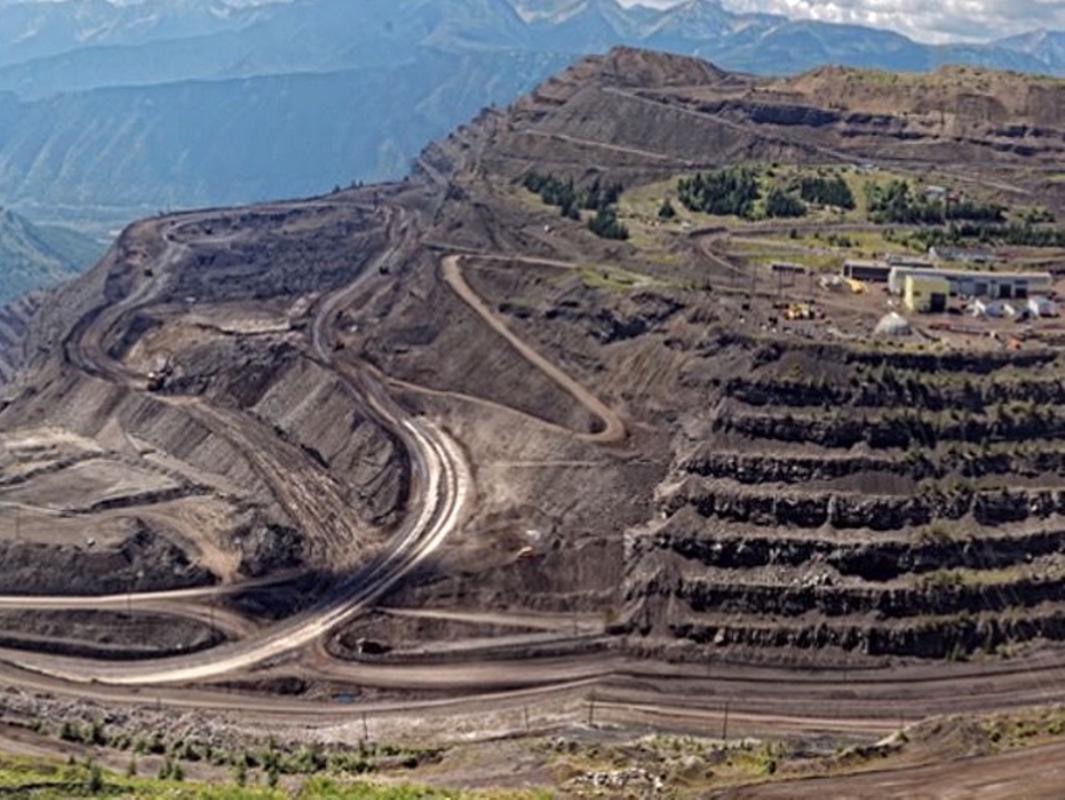
The Grassy Mountain project, which Rinehart purchased from Riversdale Resources in 2019 for $740 million, proposed to dig up 4.5 million tonnes of metallurgical coal a year over a 23-year period in a critical watershed of the Oldman River in southern Alberta near the Crowsnest Pass. That major prairie river provides water for the communities and irrigation industry downstream.
Due to water concerns, a broad public coalition of ranchers, farmers, First Nations and conservationists strongly opposed the project as well as related mining developments in the Rocky Mountains by largely Australian coal interests.
In 2021 a joint review panel firmly recommended after an extensive public hearing that the Grassy Mountain project was not in the public interest for economic and environmental reasons, including selenium pollution. It also raised issues about the quality of coal Northback proposed to mine.
As soon as the Alberta and Canadian governments accepted the panel’s recommendations, Rinehart commenced a legal campaign to overturn the decisions.
Yet subsequent rulings by the Court of Appeal, Court of King’s Bench and Supreme Court of Canada repeatedly found that Northback had no legal case.
In 2023 five largely Australian companies, including Valory Resources (also known as Black Eagle Mining Corp.), Atrum Coal, Northback Holdings and Cabin Ridge Holdings, sued the Alberta government for a total of $15 billion over its changes to coal policy.
One of Rinehart’s two lawsuits against the government of Alberta sought damages of $7 billion in a filing dated March 2024. The status of these Northback claims is not known, while two other companies settled with the Alberta government out of court at a cost to taxpayers of nearly $300 million.
Northback Holdings did not reply to queries from the Tyee.
Kyla Tienhaara, a Queen’s University professor who studies the impact of investor-state dispute settlements, called Northback’s CPTPP claim “outrageous.”
She termed “preposterous” an investor-state dispute settlement mechanism that “allows for companies to claim compensation for speculative lost future profits rather than just their sunk costs (what they spent, for example, on mining exploration).”
The Latest Grassy Mountain Mine Proposal Is the Same Old Promotional Hype
read more
She cited an example in which a 2019 tribunal awarded Tethyan Copper Co., a joint venture of Antofagasta of Chile and Barrick Gold of Canada, US$5.84 billion in damages against the government of Pakistan. That’s two times what the country spends on health care for its people every year.
Yet the company had never commenced work at the mining site, having spent only $220 million on its development. “At the time of the tribunal’s decision, the country was in economic turmoil, and the award was released mere weeks after an announcement that the International Monetary Fund had granted US$6 billion in financing to Pakistan,” added Tienhaara. The IMF grant covered the total amount of the claim.
Tienhaara said that Albertans and Canadians “should be seriously concerned that this system provides foreign companies and wealthy individuals with an extremely powerful tool to bully governments with. The threat of an ISDS case can lead policymakers to roll back or fail to implement policies that are clearly in the public interest. It makes no sense to privilege one group of actors (foreign corporations) over everyone else.”
Nigel Bankes, a retired Calgary law professor who has followed the province’s coal battles, said he was not surprised by the latest lawsuit. “If there’s one thing Gina Rinehart is good at, it is pursuing every legal avenue available, and every possible court system (Alberta KB, Alberta Court of Appeal and the SCC, the Federal Court and now an international investment tribunal) to get what she wants.”
Northback says it was ‘not afforded due process’
Northback’s claim also cites Alberta’s 2022 coal moratorium as a bone of contention. That’s when public protests forced the Alberta government to reinstate its original Coal Policy which forbade open-pit mining in most of the Rockies.
“Prior to implementing this indefinite moratorium, the Claimants were not afforded due process, procedural fairness, transparency or candour,” states the ISDS claim.

Corb Lund’s Drive to Block Coal Mines Gets the Green Light
read more
Yet Premier Danielle Smith’s government rescinded the moratorium in 2025. Ever since then Northback has signalled its intention to reapply for a revised Grassy Mountain project under new coal rules set by industry and government.
As soon as Smith’s resource-friendly United Conservative Party government came to power in 2022, it actively signalled unqualified support for Northback Holdings’ coal ambitions in southern Alberta.
Smith repeated company claims that the Grassy Mountain project would clean up a previously unreclaimed mining site when in reality the project would expand the area of destruction. Her energy minister, Brian Jean, then exempted the company from the 2022 coal moratorium by claiming the denied project was really an “approved coal project.”
Smith also supported a referendum on the project in the municipality of Crowsnest Pass even though the project is located in the neighbouring municipal district of Ranchland, whose residents are overwhelmingly opposed to the proposal.
Regulator’s controversial Northback meeting
The CEO of the Alberta Energy Regulator, or AER, met with Northback representatives just weeks before the AER approved plans for more exploratory work needed for a new mine application at Grassy Mountain.

The Billionaire Who Bored a Hole in Alberta’s Laws
read more
That meeting appalled at least one AER public hearing commissioner. In an email obtained by the Globe and Mail, AER commissioner Meg Barker asked, “Why on earth did they think it was appropriate to meet with Northback before the decision was issued?” She described the decision to meet with the company before the AER issued its ruling as “an egregious error in judgment and entirely inappropriate.”
The AER also stirred outrage by cancelling a planned public hearing on a new coal mine in response to a company’s complaints about the process.
Earlier this month, the Smith government signed a new draft agreement with Ottawa that would give Alberta more say over environmental impact assessments for major projects including Grassy Mountain. Critics have called the agreement “an abdication of federal responsibility.”
Investor-state dispute settlements of the kind the Comprehensive and Progressive Agreement for Trans-Pacific Partnership provides have been criticized as undemocratic and secretive.
In recent years Canadian mining and energy companies have repeatedly used ISDS agreements outside of North America to extract concessions, including $10 billion in compensations, from foreign governments. ![[Tyee]](https://thetyee.ca/design-article.thetyee.ca/ui/img/yellowblob.png)
 Log in


 And:
And:


 Shijie Lu