plant lover, cookie monster, shoe fiend
20637 stories
·
19 followers

What COVID is teaching doctors about the relationship between viruses and cancer - Los Angeles Times

1 Share

In early 2022, around the time the Omicron variant started driving a new surge in COVID-19 cases, researchers at James DeGregori’s University of Colorado Anschutz lab noticed something unusual: When lab mice with dormant breast cancer cells were infected with either influenza or SARS-CoV-2, the animals were significantly more likely to develop aggressive lung tumors.

What’s true for a mouse isn’t always true for a human. But when the team examined healthcare databases, they were surprised to find that something similar appeared to be going on in the human population.

Analysis of records from the U.K. Biobank showed that cancer survivors who contracted COVID in 2020 — when the virus was new and no vaccine was available — were significantly more likely to die of recurring cancer than patients who didn’t get the virus, particularly within the year after their COVID infection.

Analysis of a separate U.S. breast cancer database found that breast cancer patients in remission who got COVID were significantly more likely to develop metastatic lung tumors than patients who did not contract the virus.

The University of Colorado researchers couldn’t analyze influenza’s effects as thoroughly — most flu infections don’t make it into medical charts, as patients often ride out routine cases at home. They also weren’t able to take into account whether the severity of a patient’s COVID infection influenced the likelihood of a cancer recurrence. But COVID’s novelty gave the team the data it needed to track the effects of viral inflammation on cancer recurrence. Their results were published last year in the journal Nature.

“When [cancer] comes back, it comes back with a fury,” DeGregori said. “We think that these virus infections can be almost like fuel for the fire.”

Unwelcome as COVID’s emergence was, the sheer scale of its spread has vastly deepened science’s understanding of the ways that viruses can continue to affect a human body long after the initial illness has passed.

Scientists need a critical mass of data to be able to identify statistically significant patterns. In the case of a global pandemic “where the whole population gets infected, basically you have a denominator of 7 billion people,” said Dr. Stanley Perlman, a University of Iowa microbiologist who studies coronaviruses.

The rapid increase in patients suffering from long COVID supercharged research on post-viral syndromes — the complex collection of lingering symptoms doctors have long observed in some patients infected with pneumonia, flu or other viruses.

Now, as more years of post-pandemic data have accumulated, scientists are also able to look more closely at the complicated relationship between COVID and cancer, a disease that takes significantly longer to make itself known.

“This is something that merits more attention,” said Dr. Aditya Bardia, director of Translational Research Integration at the UCLA Health Jonsson Comprehensive Cancer Center. Bardia’s lab has also observed associations between COVID infection and breast cancer recurrence; that research has not yet been submitted for peer review.

There isn’t sufficient evidence to indicate that COVID is an oncogenic, or cancer-causing, virus, a half-dozen researchers contacted for this article said. The virus has some significant structural differences from known oncogenic viruses such as human papilloma virus, which is linked to cervical cancer, and hepatitis B and C, which are associated with liver cancer.

But the pandemic has left some evidence that viral infection may play a role in reawakening dormant cancer cells present in a patient’s body before infection.

“COVID and influenza do not cause cancer under themselves, but if you have cancer and you have dormant cancer cells that are normally under control by your immune system, getting a severe case of COVID can help reactivate those existing cancers,” said Dr. Patrick Moore, a virologist and epidemiologist at the University of Pittsburgh.

A sharp increase in metastatic breast cancer cases in the pandemic’s early years was largely attributed to care delayed by pandemic restrictions, rather than a real increase in incidence.

More recent work suggests that “it’s not just the logistics of the pandemic, but it’s really something inherent to infection” behind the association with cancer recurrence, said Melanie Ott, director of the Gladstone Institute of Virology and a professor of medicine at UC San Francisco.

The effect isn’t specific to COVID, as DeGregori’s Nature paper shows, Ott pointed out. One of the body’s natural defense mechanisms against a virus like COVID or influenza is the release of cytokines, proteins that act as chemical messengers helping to coordinate the immune system’s response.

But in some cases of severe infection, the immune system can overcorrect and send out an excess amount of these proteins, a serious and potentially fatal reaction called a cytokine storm.

Research in the early months of the pandemic showed that patients with severe COVID who died or required hospitalization were much more likely to have runaway levels of cytokines, including a particular protein called interleukin-6, or IL-6.

Chronically high IL-6 levels have also been linked to recurrence and metastasis of multiple types of cancer.

DeGregori’s team found that breast cancer cells in mice whose dormant cancers returned after a COVID infection reactivated in response to high levels of IL-6. Their research couldn’t prove that the same biological process happens in humans, DeGregori said. But the fact that a review of real-life patient data showed a high correlation between COVID infection and cancer recurrence makes him think they are on to something.

It’s not a settled question, even among the paper’s authors. Dr. Doug Wallace, director of the Center for Mitochondrial and Epigenomic Medicine at Children’s Hospital of Philadelphia and a co-author on the Nature paper, said he has a “slightly different interpretation” of the data.

IL-6 also inhibits mitochondria, the parts of a cell that generate energy. Wallace thinks that this suppression of the cells’ powerhouses is actually what’s encouraging cancer growth. (Mitochondrial dysfunction is also a prime suspect in the cause of long COVID.)

Other viruses shut down mitochondrial function too, Wallace said. SARS-CoV-2 seems to be particularly good at it, which could be the reason an infection leads to the lingering misery of long COVID in some people or an unexpected recurrence of cancer in others.

Researchers stressed that this area of study is still in its early days, and there is no definitive causal link between COVID infection and cancer recurrence.

“It’s fair to say that [COVID infection] could be added to the long list of theoretical reasons that cancer might be more likely to come back, [but] I’m on the skeptical side of all things. Prove it to me,” said Dr. Eric Winer, director of the Yale Cancer Center. “This is one where I’d say, interesting finding, let’s look more.”

The evidence to date suggests simply that the question is worthy of more study, researchers said. If there is any action people with vulnerable immune systems should take as a result, it’s to continue reasonable precautions against viral infections of all kinds.

“There’s a very, very, very compelling reason for those patients who have chronic diseases to avoid getting a severe case of influenza or COVID or respiratory syncytial [virus] — all of these diseases for which good, safe, effective vaccines exist,” Moore said.

Read the whole story
sarcozona
5 hours ago
reply
Epiphyte City
Share this story
Delete

How popular are post-capitalist ideas? Some recent data — Jason Hickel

1 Share

Here is a list of studies, surveys and polling results that shed some light on popular perceptions of post-capitalist ideas. I will seek to update this list periodically.

Support for post-capitalism

1. A survey shows that a majority of people around the world (56%) agree with the statement “Capitalism does more harm than good”. In France it is 69%, in India it is 74%. Source: Edelman Trust Barometer, 2020.

2. A study found that in 28 of 34 countries, a majority of respondents hold anti-capitalist positions. Source: Economic Affairs, 2023.

3. A study of the US, Canada, Australia and the UK found that in all four countries, a majority of respondents aged 18-34 (54-61%) agreed that “socialism will improve the economy and well-being of citizens”. Source: Fraser Institute, with polling done by Leger, 2023.

4. A study of US public opinion found that 62% of respondents aged 18-30 hold favourable views of socialism. And more Democrats have positive views of socialism (67%) than capitalism (50%). Source: Cato Institute, with polling done by YouGov, 2025.

5. A survey of youth climate movement groups found that more than half say that the root cause of the climate and ecological crisis is “a system that puts profit over people and planet”.  89% of this group specified the system as capitalism. Source: Climate Vanguard, 2023.

Support for post-capitalist policies

1. Public job guarantee. The job guarantee is highly popular in polls. In the UK, 72% of people support it. In the US, it's 78%, and in France it’s 79%.  There are few policies that enjoy such widespread support, and research shows it can appeal strongly to working-class voters who otherwise feel alienated from the political process. 

2. Workplace democracy. This study finds that US Americans prefer workplace democracy (where workers own shares, are represented on boards, and elect their managers), even while recognizing this requires more responsibility. American Political Science Review, 2023.

3. Universal public services. Polls show that universal public services are popular in the UK (substantial majorities want public control over healthcare, education, energy, rail, water, postal services, parks, etc.). In the US, 64% of people support universal healthcare, while 62-64% support a public option for housing, internet and childcare.

4. Rent controls. Polling in the UK shows that 74% of people support permanent rent controls. In the US, polls in Massachusetts and California show majority support for rent controls (71% and 55% respectively).

5. Living wages. Polling in the US shows that 72% of people support a living wage. In the UK, 87% believe that companies should pay a living wage if they can afford to.

6. Progressive taxation. In Europe, 84% of people support a global tax on millionaries (in the US, 69% support).

7. Reduced inequality. Data from 40 countries reveal that people tend to prefer relatively low pay ratios (around 4:1) between CEOs/ministers and low-skilled workers, dramatically lower than real-existing ratios. This conclusion holds across demographic groups. Perspectives on Psychological Science, 2014.

8. Sufficiency-oriented policies. A study of European citizens’ assemblies found that sufficiency policies enjoy very high approval rates (93%). The study also found that sufficiency objectives achieved through regulatory policies had the highest support. Source: Energy Research and Social Science, 2023.

9. Transformation of international institutions. In Europe, 71% of people support democratizing international institutions such as the UN and IMF with population-proportionate voting shares (in the US, 58% of people support).

10. Climate justice. A WID study shows strong majorities in Europe and the US support high-income countries compensating low-income countries for climate damages, funding renewable energy in low-income countries, and supporting low-income countries to adapt to climate change. Approximately 80-90% of people in high- and medium-income countries believe there should be a global tax on millionaires to finance low-income countries, and call for a global democratic assembly on climate change. 88-91% believe that national shares of the carbon budget should be in proportion to population, and 72-82% believe that countries that have emitted more since 1990 should receive a smaller share.

Read the whole story
sarcozona
9 hours ago
reply
Epiphyte City
Share this story
Delete

Duluth engineering professor’s fabric recycler keeps old clothes out of landfills | MPR News

1 Share

University of Minnesota Duluth associate professor Abbie Clarke-Sather (left) and junior Bruce Johnson load fabric into a shredding machine in Duluth on May 20.

Read the whole story
sarcozona
3 days ago
reply
Epiphyte City
Share this story
Delete

Nursing-home study finds reduced staffing in those in states giving them immunity from COVID lawsuits

1 Comment

study of more than 13,000 US nursing homes concludes that those in states that adopted laws granting them immunity from COVID-related lawsuits operated with 2.5% less daily staff than those in states without those protections, potentially compromising patient care.

Northwestern University researchers led the study, publishing their findings yesterday in JAMA Health Forum

The team used a difference-in-differences model to assess staffing levels in all 13,205 US nursing homes that reported data from January 2018 through March 2023. Data were derived from the Centers for Medicare & Medicaid Services’ Nursing Home Compare and Payroll Based Journal Daily Staffing Averages websites, as well as weekly nursing home COVID-19 cases.

“A central goal of medical malpractice law is to ensure quality of care by deterring negligent treatment,” the authors wrote. But “during the COVID-19 pandemic, many states adopted immunity from tort liability for harms to nursing home residents, creating a natural experiment.”

Average of 8 hours less staff time per day

From 2018 to 2023, roughly 43 US states began granting some form of tort immunity to nursing homes from lawsuits filed by patients and their families. Of the 13,205 nursing homes included in the study, 86.2% were granted tort immunity, and 13.8% weren’t. 

Some of these laws had automatic end dates (eg, six months post-adoption), while others were indefinite; 23 states provided immunity retroactive to a period (median, 2.8 months) before the law was passed, and some are still in effect.

Nursing homes in states that adopted such laws tended to be larger and non–hospital based and were more likely to have a greater proportion of White residents. 

Facilities immune from tort liability began providing less staff time per patient per day than those in states that didn’t grant such protections: a 2.5–percentage point (pp) reduction in overall daily staff hours and a 1.2-pp reduction in staffing hours per patient per day. The 2.5-pp decrease translated to, on average, nearly eight hours’ less staff time per day for clinical care and other duties.

The authors noted a 2.0-pp decrease in hours of care per patient per day for certified nursing assistants (CNAs), who provide direct patient care, whereas staffing rates for registered nurses (RNs), who often have administrative roles, stayed the same.

“These policy changes are not associated with a defined monetary reward or fixed staffing target,” corresponding author David Zingmond, MD, of the University of California Los Angeles, said in a university news release. “So the robust magnitude of change was surprising.”

Less likely to employ, look for staff

The authors said the liability-limiting laws were triggered by anticipation of a surge of medical malpractice lawsuits alleging that negligence caused patients to contract or die from COVID-19. 

This amount of time (5.2 minutes) might seem small, but for a patient in need, nearly 8 hours of time could make a substantial difference.

Although they acknowledged that the financial problems and general instability of healthcare staffing during COVID-19 would have shortened the time caregivers could devote to patients, the researchers said the numbers suggest that nursing homes with lower tort exposure may have been less likely to employ nursing staff or try to find replacements during worker shortages. 

The laws, they said, “appear to have had the unintended consequence of reducing staffing levels, perhaps impairing the deterrent effects of exposure to tort law by lowering incentives for administrators to search for nursing staff during a period when there were extreme shortages, thus, high nursing prices.” 

That RN staffing rates were largely uncorrelated with immunity is consistent with the need for nursing facilities to maintain staff in their administrative and medical roles, the authors said. 

“However, CNAs and LPNs [licensed practical nurses] provide nearly all the direct care to nursing home residents: it is among the CNAs, who comprise two-thirds of the clinical staff, where we find the association between staffing and tort immunity,” they wrote.

With the average nursing home protected against tort liability was estimated to have 7.9 fewer daily staff hours, if the time had been spread equally among all residents, “this amount of time (5.2 minutes) might seem small, but for a patient in need, nearly 8 hours of time could make a substantial difference,” they wrote.

The authors said that research into the clinical effects of reduced staffing could help paint a more complete picture of nursing-home care during the first years of the pandemic.

Read the whole story
sarcozona
3 days ago
reply
New public health policy is "let them die"
Epiphyte City
Share this story
Delete

Confirmed Detections of New World Screwworm | Animal and Plant Health Inspection Service

1 Comment

Last Modified: June 11, 2026

The dashboard below is designed to provide a current snapshot of confirmed New World screwworm animal and wild fly detections in the United States. USDA APHIS is fully prepared to respond to detections, and we work closely with our State partners on surveillance, reporting, and control efforts.

The dashboard captures individual animal cases by county and State, animal type and species, confirmation date, and status. 

  • Active cases are those that involve ongoing disease mitigation efforts, including treatment and wound management of the infested animal until all wounds have healed. 
  • Inactive animal cases refer to situations where mitigation activities are no longer required. Either the animal has fully recovered—with wounds healed and treatment completed—or, in cases where treatment was not performed, appropriate measures have been taken to prevent the spread of NWS, such as appropriate carcass management of a deceased infested animal.

The dashboard also captures fly traps with at least one NWS wild fly detected by county/State and confirmation date.   

This dashboard is not intended to support international trade.

Read the whole story
sarcozona
3 days ago
reply
not great, not great at all
Epiphyte City
Share this story
Delete

A New Study for Heavy Menstrual Bleeding Needs Your Help

1 Share
Silver Place/Getty Images

One thing that I am very proud of here at The Vajenda is how responsive the community has been in enrolling in and promoting the medical studies I have shared. Two doctors from two different studies have previously thanked me and the Vajenda community because their studies filled up faster than expected, which they attributed to posts here on The Vajenda.

We should all be angry about the systemic underfunding of women’s health, but we can put that anger into action by supporting good studies that are trying to recruit participants. It is a sad truth that many studies have a harder time recruiting women, often because women have greater caregiving responsibilities than men and because of fear of side effects and distrust (completely valid). When I first learned that studies looking to recruit women were more likely to struggle, I decided to do my part and promote good studies that might connect with my audience here.

This new study involves testing a home transcutaneous auricular neurostimulation device to reduce heavy menstrual bleeding. I saw it promoted by a hematologist whom I trust and respect on BlueSky, and decided to read more, because I was fascinated by the proposed biological connection that stimulating the vagal nerve could reduce menstrual bleeding, and because women need more options for heavy bleeding.

The Vagal Nerve and Blood Clotting

The hypothesis is built on preclinical work showing that vagus nerve stimulation modifies platelet function and improves clotting. In a pig model, electrical vagus nerve stimulation reduced the time it took to stop bleeding from a wound by about 43% and total blood loss by about 46%.

The main theory behind the connection to blood clotting is that vagal nerve stimulation signals the spleen, where immune cells release acetylcholine. This acetylcholine binds to receptors on platelets, increasing calcium influx and making the platelets more responsive to clotting at bleeding sites, which could reduce menstrual bleeding. Basically, vagal nerve stimulation makes stickier platelets.

What Evidence Do We Have?

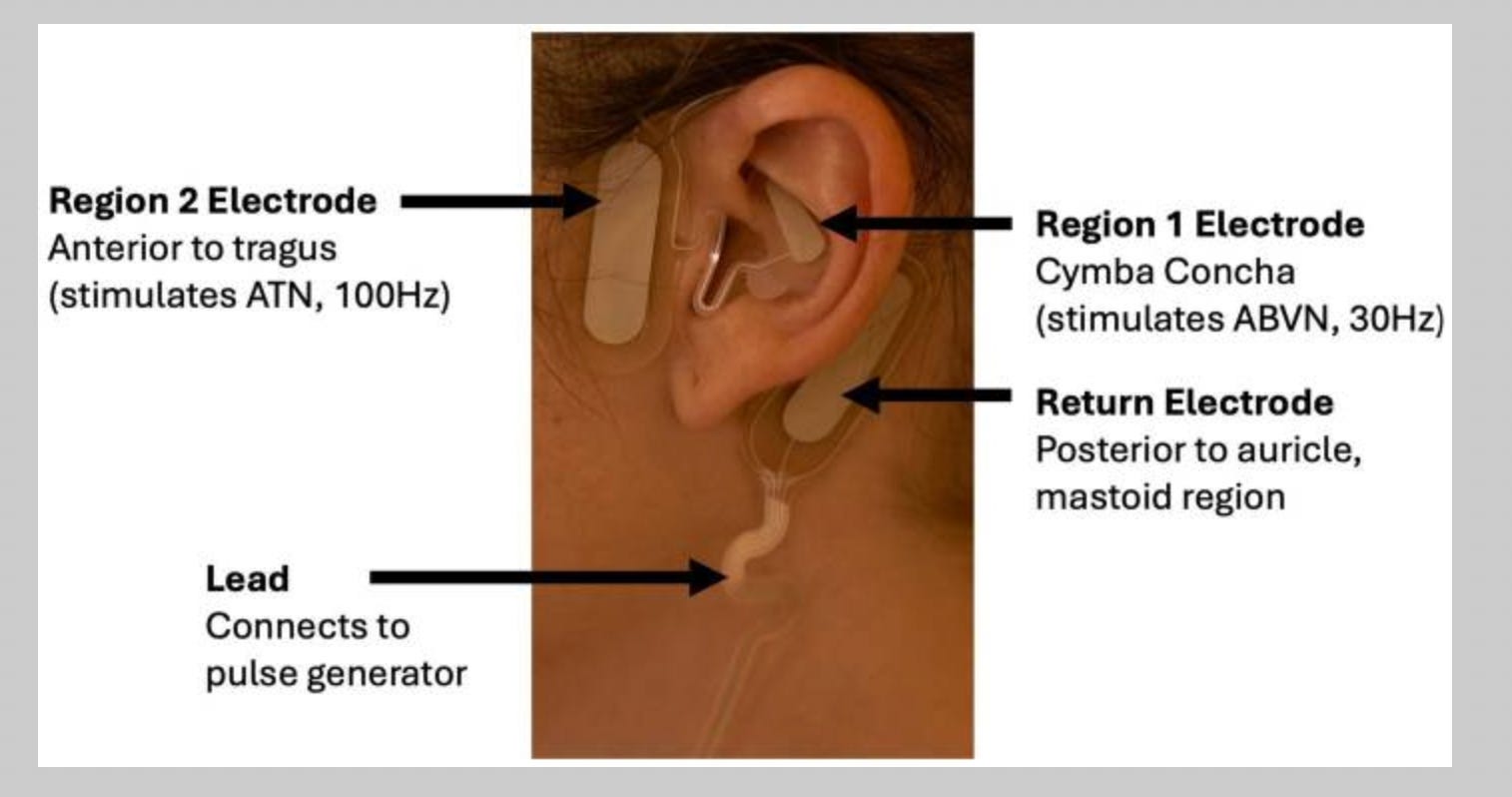
There has already been a Phase I study, which was an open-label pilot trial (NCT06064851) of a wearable transcutaneous auricular neurostimulation (tAN) device. The device targets the auricular branch of the vagus nerve (ABVN) and the auriculotemporal nerve (ATN), a branch of the trigeminal nerve.

As this was an open-label study, this means the women were using the device, they knew they were using it, and there was no control group.

The trial enrolled 16 women with heavy menstrual bleeding: 8 with von Willebrand disease (VWD, a bleeding disorder), and 8 with heavy bleeding of unknown cause. Each participant served as her own control: one baseline menstrual cycle was measured using a validated self-completed blood loss assessment chat, the PBAC, followed by one treatment cycle. The intervention was self-administered 1-hour sessions twice a day during menstruation.

The results were impressive:

  • 57% lower PBAC scores in the VWD cohort

  • 54% lower PBAC scores in the unexplained HMB cohort

  • 19% reduction in menstruation duration in both groups

  • There was also was a reduction in cramps, pain, and fatigue, with improved quality of life scores

This is exciting, but it is also extremely preliminary data with significant limitations.

It was an open-label study, so the women knew they were using the device, because of this, as the bleeding measure was self-reported, the results are susceptible to placebo and expectation bias. Also, there were only 16 participants and each participant compared only two menstrual cycles; there are significant normal cycle-to-cycle variations in menstrual blood loss, so a single comparison cycle is not enough to say the device works, but it is enough to justify the investment for a Phase 2 study. Also, the 54–57% reduction is a pretty large success rate, so that raises some skepticism. But who knows? That is why we use this data and move to the next level of research to find out.

I point this out not to discourage anyone, but to explain that a Phase 1 study is just that. A fact-finding mission. It is the first step on a long road and responsible researchers don’t jump from this point to proclaiming they have a solution on social media. The goal was to identify a signal, and that was achieved. The next step is a more robust Phase II study to determine whether the signal persists. And, quite frankly, it’s nice to see a device company doing it the right way.

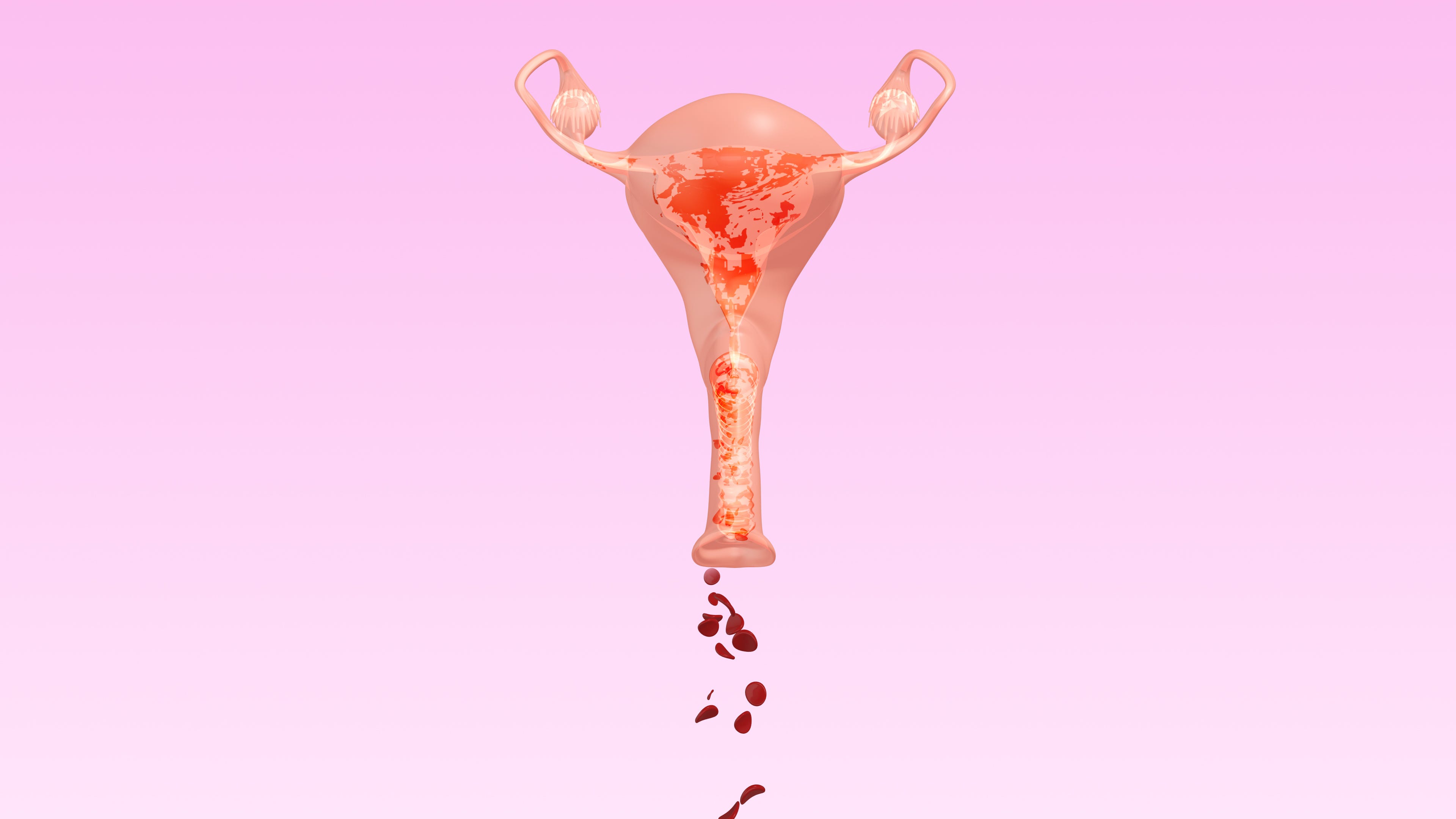
Researchers are testing a wearable nerve stimulation device that may reduce menstrual bleeding.

Share

Which Leads Us to the New Study

It is called Delivering tAN to Reduce HMB: The LUNA Study (LUNA). The clinical trial number is NCT07326722, and it can be found here.

The LUNA study is a randomized, double-blind, sham-controlled, clinical trial for participants with heavy menstrual bleeding who don’t have fibroids or any known conditions that affect the uterus as a cause. The study divides participants into two cohorts based on age: adolescents aged 14-21 and adults aged 22-45.

The intervention is transcutaneous auricular neurostimulation (tAN), or sham stimulation. The study will run over five menstrual cycles, and it is remote, so no in-person visits are needed. Blood loss is assessed using the self-administered Pictorial Bleeding Assessment Chart (PBAC), and information on pain and other menstrual symptoms, as well as quality of life, will also be collected.

There will be two run-in menstrual cycles without intervention, followed by three consecutive cycles of either one 2-hour sham or active tAN session daily, beginning on Day 1 of menstruation and continuing through the final day of each menstrual cycle.

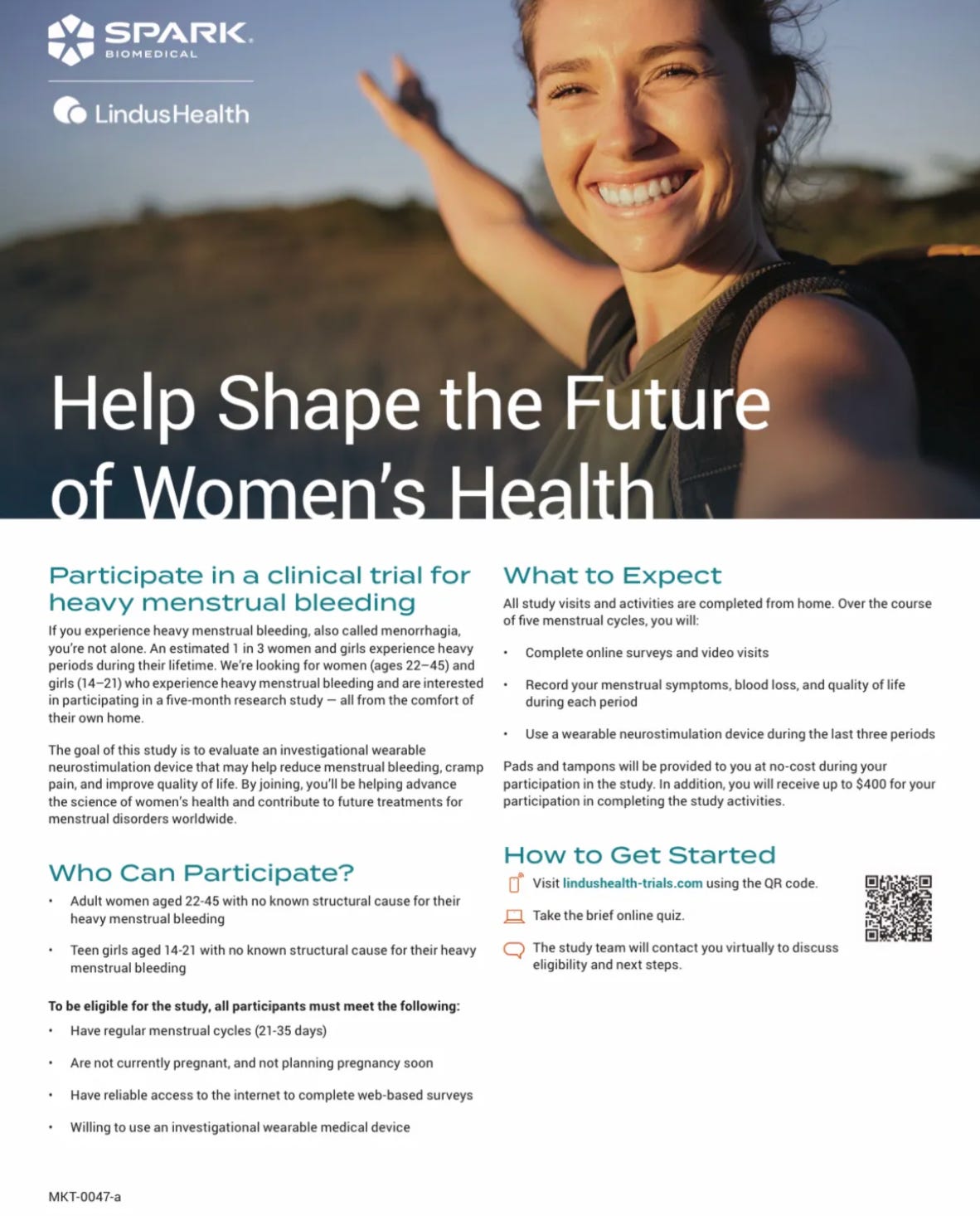
Here are the eligibility criteria:

  • Regularly menstruating females aged 14-45 years

  • History of heavy periods (there are specific criteria to meet)

  • Stable/consistent use of current non-hormonal medications and supplements for the past three months, willingness to continue use for the duration of the study, and not start any new medications or homeopathic remedies

  • Reliable access to an internet-enabled device to complete required questionnaires that is compatible with the study application (iOS 18 and Android 15 or greater)

  • Willingness to consistently use only study-provided menstrual products throughout the duration of the study

  • Participant PBAC scores are ≥150 for both baseline menstruation months (if someone doesn’t have heavy bleeding during the run in months it makes sense that they can’t participate).

Bottom Line

The concept is biologically plausible based on animal data and the first human trial. This tells us that it is worth moving to the next study, and that is what is happening. We should celebrate this. It’s a big deal to have investment in non medication approaches to heavy periods. Considering the magnitude of the problem, the more options we have for women, the better. And who knows, if the device does prove effective, there could be other applications. Good research can lead in all kinds of directions.

If you have heavy menstrual bleeding, are interested, and think you qualify, consider exploring the study (and let them know who sent you). If this isn’t the study for you, please do share with your friends. They need eighty participants, so let’s help them fill the study!

Here is the study contact information:

Name: Laura Mitchell

Phone Number: (844) 534-9716

Email: <a href="mailto:LUNA@lindushealth.com">LUNA@lindushealth.com</a>

And the flyer, although I couldn’t get the think the link or QR code works.

A new clinical trial is testing whether vagal nerve stimulation can decrease menstrual blood loss. The biology is plausible, the early data are intriguing, and now researchers need participants to find out if it really works.

Share

References

1. Czura CJ, Schultz A, Kaipel M, et al. Vagus Nerve Stimulation Regulates Hemostasis in Swine. Shock. 2010.

2. Czura CJ, Weyand AC, Baldwin MK, et al. Transcutaneous Auricular Neurostimulation to Reduce Heavy Menstrual Bleeding in Women With and Without Von Willebrand Disease. Frontiers in Medicine. 2025.

Read the whole story
sarcozona
6 days ago
reply
Epiphyte City
Share this story
Delete
Next Page of Stories