This week’s question comes to us anonymously:
How do you lovingly care for an aging parent who treated you like shit?
This question has been sitting in my inbox for almost two years. While I fear that I’ve waited too long to possibly help the person who asked it—for which I am sorry—I had to wait until I was ready to answer it. That day is today.
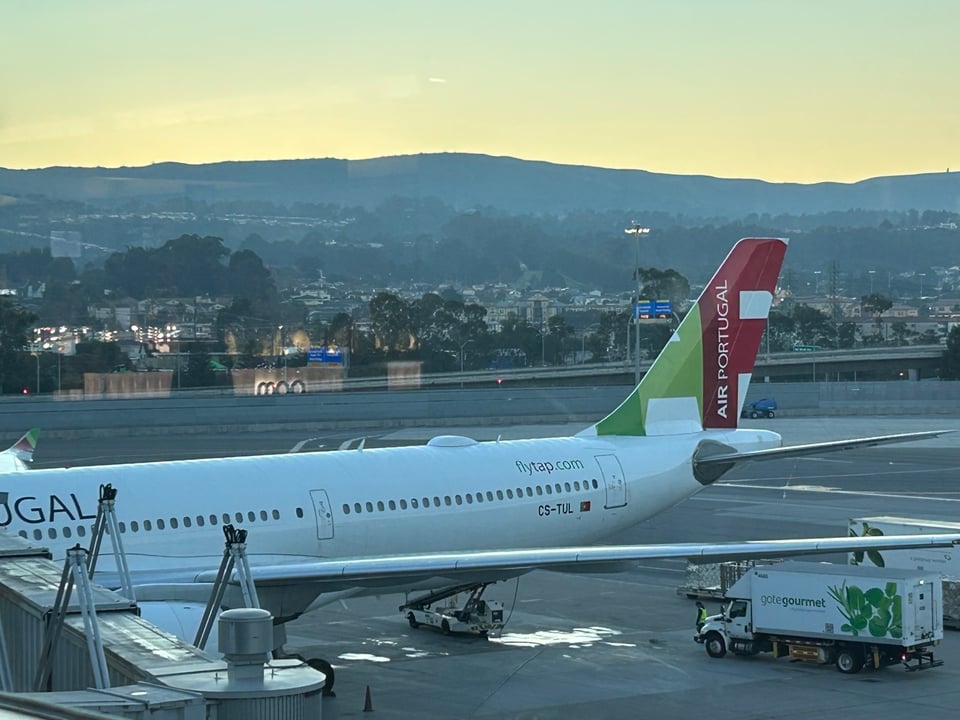
I’m currently on a flight to Lisbon to bury my father. The call came on Thursday morning, or rather there was a text. A text from my Aunt in Portugal telling me about funeral arrangements.
“Funeral arrangements for who?!”
There is a photo of my father somewhere (perhaps only in my memory of this point) where my father is sitting cross-legged on the floor of my parents’ first apartment in the United States. There’s a Christmas tree behind him (yes, this is a Christmas newsletter). The tree is foil or aluminum or whatever those old 70s trees were made of. A few feet away there’s a rotating color wheel that changed the tree different colors. He’s smiling. He’s got a 70s mustache that matches the tree. I have a vague memory of a thick white cableknit sweater. Philadelphia is cold.
My parents immigrated to the United States when I was two years old. They moved to Philadelphia because people in small towns tend to immigrate to the same place. A community is displaced, and then rebuilds itself in a new place. And folks immigrating from the small town my parents were from all immigrated to Philadelphia. I’m guessing someone was first, but since the history of the Portuguese in the New World doesn’t tend to reveal good things, I never went looking.
I’m guessing this photo would’ve been taken during their first Christmas here, which would’ve happened after they’d been here almost a year, since we immigrated in January. Although I’ve always been tentative about using the verb immigrated for myself. I was two. I’m an immigrant, but I never really immigrated. I was luggage. (I’m willfully omitting my younger brother from this story because although he is also an immigrant he voted for a man who kidnaps immigrants, and I am petty. I get to be petty today. I am erasing him.)
Going back to the photo, as I rotate the scene—which it occurs to me I’m doing for the first time right now, never having given it a thought—I’m picturing my mother with a camera in hand. Some form a cheap Kodak 135 instamatic with a rotating cube flash (I have a vague memory of it). I imagine that she’s smiling back at my father, and it occurs to me that they didn’t smile at each other too often. Certainly not recently. But this photo is possibly evidence that they once did. I wonder what their first year in a new country was like. I’m sure it was frightening at times, but this photo—which is now most likely lost—is evidence that maybe, just maybe, for a brief moment they might’ve smiled at each other more, and possibly even loved one another.
I’m currently on a flight to Lisbon to bury my father, who once bought a foil or aluminum or whatever it’s made of Christmas tree in Philadelphia and brought it home, to a shitty third floor walk-up, and set it up and then sat cross-legged on the floor in front of it, smiling at my mother while she took his picture and I am so so so fucking mad that man is dead, but that man died a long long time ago. And I am even madder about that. I am so fucking angry at you for not staying that person for longer than that moment. That one fucking moment that I have to hold so close because you gave us so few of them.
And now I’m crying on a flight, and I am angry at myself because you do not deserve it. I want to put a stranger in the ground, but try as I might, you refuse to be that. Because there were moments that gave me hope. Moments that made me realize you were capable of more. I honestly tried so hard to get more of those moments out of you, and I hate you for withholding them.
(This is an eleven hour flight, and I’ve slipped into the second person. I pity my readers this week. You are well and truly fucked.)
Speaking of which; the last thing my father told me was to go fuck myself. This happened on the phone a few years ago, during a call with my mother. I heard her turn away from the phone and ask him if he wanted to say hello. I heard him reply in the background. Tell him to go fuck himself. And that was that.
Death does not make saints, and I have neither the desire nor the power for beatification tonight.
My father has died many times (although this current death seems particularly final). There is a particularly brutal death in the death of hope. The moment you realize that there won’t be a reconciliation, that the moment movies have taught us is possible, when an aging parent and a wayward offspring (they will always see me as wayward) come to an understanding, when the mistakes of the past are laid out for sifting through, and the clouds—both real and metaphorical—part, and they see you as you are and you see them as they are, and there’s a big cry. Followed by apologies, promises to do better, and possibly a shared tapioca at the home where that parent is living out their last days. And those movies generally end with the offspring and an underwritten but supportive spouse standing in front of a fresh grave so the offspring has someone to turn to and say “I’m glad I finally got to know him” before the credits roll and everyone immediately calls their mother.
That moment doesn’t happen in real life. There is only the brutal awareness that time is slipping away and any hope of reconciliation, any hope of asking about that Christmas photo slips away with it. And that is brutal, but generally how it happens. Life isn’t written according to the rules of magical realism. There is only time, and time begets death. And it’s on us to work those two ingredients into a life that matters. To live it in such a way that our life is filled with love, and to live it in such a way that we become intertwined with other lives that we can fill with love and they, in turn, replenish our own lives with love. And if we manage to do this close-to-right (because perfectly is impossible), death is earned in a way that what we leave behind weighs more than what we put in the ground.
Graves are heavy things when we end up burying hope along with bodies.
There is another memory, in another apartment (there were many apartments, we moved almost yearly), and there are three of us now. (I have little to say about my youngest brother as well.) I don’t remember what particular mistake this was atoning for, but my father told us all to get in the car. He drove us to Sears on Roosevelt Boulevard, which is long gone, and told us to pick out baseball equipment. We thought this was odd because he’d never shown an interest in baseball, and I’m not sure any of us had either at that point. But we picked out gloves, a couple of balls, and an aluminum bat. I also remember that we bought Baltimore Orioles caps, which sticks with me because I’m not sure why a department store in Philadelphia would’ve had these in stock, but we most likely chose them because there was a cartoon bird on the cap, and we liked cartoons. He then drove us out to a park where he attempted to play baseball with us, which none of us could do. And I remember as his rage grew with every errant throw, and every missed catch, and every whiff of the bat, and I remember a slap, and I remember all the baseball equipment ending up in a trash can on the way to the car. I remember a silent ride home. I can’t remember if he came home with us, or if he angrily dropped us off. Most likely it was the latter, because I’m playing the odds.
As time stretched away from the moment when that first Christmas photo was taken, home became less of a place where my parents would take smiling photos of each other and more of a place where he would stash the family he had grown to regret.
The baseball story is a recurring theme with my father. The big moment that was supposed to make up for a thousand little missed moments. The large gesture that, in his mind, made all the kicks and slaps—and later, punches—something that could be brushed under the table. And even then, the big moment ended with a return to form.
Children are not made for big moments. They cannot hold them. We didn’t want baseball equipment, we wanted him to smile when he looked at us. We wanted him—as stupidly cliché as it is—to tell us that he was proud of us. And since we’ve jumped into the cliché pool and we’re already wet—yes, I am flying to bury a man who never told me he loved me. But I say with with some amount of certainty, all children are born ready to love their parents. It takes a lot to push that away, and now that I’m a father myself I cannot imagine why someone would push away this amazing thing, this love, this thing that helps to keep me alive. And now I’m crying, not because of him but because I am thinking of my daughter, and how amazing it feels to hug her and tell her that I love her, and to know that she loves me back, and that we have a relationship of small moments. Moments that can be held in our hearts, but also moments that we know we don’t have to cherish like a lost half-century old photograph because our moments are abundant. I cannot wait to hug my daughter again, and to tell her I love her. But to do that I have to bury my father.
Sometimes, to raise our children we have to bury our fathers multiple times. And here I will finally begin to answer your question: How do you lovingly care for an aging parent who treated you like shit? And look, I’ll be straight up and tell you that I had no idea where this was going when I started, but it revealed itself. You loving care for an aging parent by protecting his grandchildren from his sins. You lovingly care for an aging parent by making sure that the way they treated you stops with you. You lovingly care for an aging parent by learning how to love others, and by letting them love you. You lovingly care for an aging parent by digging multiple graves, the first one for their sins, and the second one for their body. As my therapist likes to remind me, my father hurt me because most likely someone hurt him. And while that doesn’t make it ok, it does contain the key on how to stop a cycle that doubtlessly has been running full steam in my family for generations.
And that cycle is over, as least as far as one of three sons is concerned. (I fear it will continue for the other two.)
Which explains why I’m on this flight, getting closer to his body with every word I type. It’s not because I believe in closure. It’s because I need to prove to myself that the man who raised me didn’t break me. That even though he didn’t teach me the right thing, I have learned what the right thing is. And it took some fucking work, man. And I am putting him in the ground in the same cemetary where generations of my ancestors have been put in the ground. And somehow, I need to let these ghosts, all these wretched ghosts that are expecting me in their genetic haunting ground, know that I won’t be joining them. This is the last of our dead we’ll put in this ground. We are done. A new cycle is starting, a cycle of small moments. A cycle where a child’s love is rewarded, and appreciated, and returned in kind. A cycle where we hold each others’ hands, and laugh at each other’s jokes, and fill each other with joy. And love.
I was hoping to end this with the realization that, despite it all, I loved my father. And maybe I do, I’m still not sure. But I can say, without any doubt at all, that I wanted to. Man, I really wanted to. It was there for the taking. All he had to do was reach out. I’m truly sorry he didn’t.
I think I would’ve been a good son.
❤️🩹 Thank you for making it to the end. This one was hard, and holy shit… I bet there’s a part two for the flight back! Buckle up, because Mom’s on the ground is she’s gonna want some stage time!
🖐️ Got a question? Ask it! You too can get a feel-good reply like this one.
🍉 Please donate to the Palestinian Children’s Relief Fund. They’ve lost so much more than most of us can even fathom.
🏳️⚧️ Please donate to Trans Lifeline, and for fuck sake, if there is a trans kid in your life please love them. They are so so so so ready to love you back.
 Log in






 There is growing evidence that climate change is worsening the severity of extreme floods and droughts, contributing to the global increase in water violence. (Photo by
  Water conflicts reported in the