plant lover, cookie monster, shoe fiend
20833 stories
·
20 followers

Scientists uncover shared biology behind profound fatigue in five major illnesses | EurekAlert!

1 Share

A shared biological secret that helps explain chronic exhaustion in conditions including long Covid and PTSD has been discovered by researchers at the University of East Anglia and Oxford BioDynamics.

A new paper published today in the Journal of Translational Medicine reveals striking biological similarities between five major illnesses which until now have largely been viewed as separate disorders.

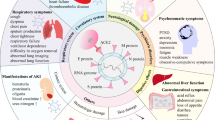
The findings suggest that chronic fatigue syndrome (also known as ME), long Covid, post-traumatic stress disorder (PTSD), rheumatoid arthritis and multiple sclerosis (MS) may be driven by common underlying mechanisms.

This is despite the conditions being triggered by different events - ranging from viral infections to psychological trauma or autoimmune responses.

Lead researcher Prof Dmitry Pshezhetskiy, from UEA’s Norwich Medical School, said: “Until now, illnesses including long Covid, PTSD, ME/CFS, multiple sclerosis and rheumatoid arthritis were viewed as seemingly unrelated and triggered by completely different events.

“ME/CFS often follows viral infection. Long Covid develops after SARS-CoV-2 infection. PTSD emerges after traumatic experiences. Rheumatoid arthritis is an autoimmune disease attacking the joints, while multiple sclerosis attacks the nervous system.

“But one thing that links them all is that patients frequently report remarkably similar symptoms - overwhelming fatigue, brain fog, poor concentration, disturbed sleep, autonomic dysfunction and a dramatic reduction in everyday functioning.

“We wanted to find out why this is.

“What we discovered is something approaching a biological unifying theory of fatigue.”

How the research happened

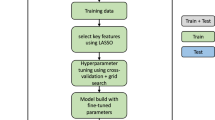
Rather than conventionally analysing DNA sequences, researchers from UEA used Oxford BioDynamics' innovative EpiSwitch® Orion platform, which examines the three-dimensional architecture of the genome, essentially studying how DNA folds and interacts inside living cells.

The analysis was computational. Published genomic data for long Covid, PTSD, rheumatoid arthritis and multiple sclerosis, drawn from existing genome-wide association studies, were combined with 3D genomic data from an earlier ME/CFS patient study, without needing to collect new patient samples.

“DNA is folded in our cells, so regions far apart in the linear sequence can touch, and those contact points are where genes get controlled. Orion predicts where these contact points are likely to be,” said Dr Ewan Hunter, Chief Data Officer at Oxford BioDynamics.

Applied to the five conditions, Orion found that genetic changes, that appeared to have little in common, connected into the same regulatory circuitry.

Prof Pshezhetskiy said: “We expected to find at least some overlap in genes across the conditions. But we actually found the opposite.

“At an individual gene level, there was surprisingly little direct overlap between ong Covid, ME/CFS, PTSD, multiple sclerosis and rheumatoid arthritis.

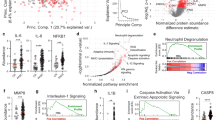
“But when we analysed how those genes interact in complex biological networks, a completely different picture emerged. Suddenly, the diseases appeared deeply connected.

“This is not something you can see by reading the genetic sequence alone, which is why these conditions may have looked unrelated for so long.

“Although these conditions are triggered by completely different events, they may ultimately disrupt the same fundamental biological systems and produce the similarly devastating exhaustion experienced by millions worldwide.”

The study found that genes linked to each illness were feeding into the same major biological systems - including immune and inflammatory signalling, mitochondrial energy production, metabolic regulation, stress-response mechanisms and neuroendocrine signalling.

Why trauma and viruses can produce the same symptoms

The team say the study could help explain why people who have experienced a viral infection or psychological trauma can go on to develop similar symptoms.

“We now think the answer may lie in shared regulatory networks embedded within the body's immune and metabolic systems,” said Prof Pshezhetskiy.

“A Covid infection may trigger prolonged immune activation. Traumatic stress may disrupt stress-hormone pathways and inflammatory responses.

“But both disturbances appear capable of converging on common biological circuits controlling energy production, immune regulation and cellular resilience.

“When those systems become persistently dysregulated, the result may be the profound and disabling fatigue seen across multiple disorders.”

A new role for the immune system

The study also highlighted several ‘hub genes’ that sit at the busiest points within these shared networks.

Among them were genes involved in immune regulation, inflammatory signalling and mitochondrial energy production. The authors stress that these are candidates identified by the analysis, and more work is needed to confirm what role they play.

One part of the analysis, looking specifically at ME/CFS, flagged LAG3 as a gene to investigate. This is a molecule associated with ‘T-cell exhaustion’, a state in which immune cells become worn out after prolonged activation.

The team say that if this can be confirmed in further studies, it could help explain why many patients appear stuck in a state of chronic illness long after the original trigger has disappeared.

“This work adds to a growing body of evidence suggesting that persistent immune dysfunction may play a far larger role in chronic fatigue-related illnesses than previously recognised,” said Prof Pshezhetskiy.

Paving the way for blood tests and treatments

“Perhaps the most significant implication is what this could mean for diagnosis.

“ME/CFS and long Covid are currently diagnosed largely through symptoms, with no universally accepted laboratory test available.

“That has left many patients facing years of uncertainty.”

Separate earlier work using the EpiSwitch platform had already produced a blood-based ME/CFS test promising high levels of diagnostic accuracy, ready to be taken through further validation needed for clinical use.

The new findings raise the prospect of signatures shared across several conditions, beyond only ME/CFS.

“We hope our work could pave the way for objective blood tests capable of identifying underlying biological signatures rather than relying solely on patient-reported symptoms,” said Prof Pshezhetskiy.

Now, the team hope the newly identified shared biological pathways could eventually lead to broader diagnostic tools and even treatments that work across several chronic conditions.

“Rather than viewing long Covid, ME/CFS, PTSD, rheumatoid arthritis and multiple sclerosis as entirely separate disorders, we now think they may be different manifestations of disturbed biological networks operating throughout the body.

“In that scenario, chronic exhaustion is not simply a symptom. It is the visible consequence of a deeper systems failure affecting immune function, metabolism and stress-response pathways.

“This study offers a framework for understanding how different triggers can converge to cause the exact same profound clinical exhaustion.”

This research was led by the University of East Anglia in collaboration with Oxford BioDynamics, the London School of Hygiene and Tropical Medicine, and Cornwall Partnership NHS Foundation Trust.

‘Beyond Genes: EpiSwitch® and Orion Platform-powered 3D Genome Architecture Biomarkers Reveal Shared Biology Across ME/CFS, Long COVID, PTSD, Rheumatoid Arthritis, and Multiple Sclerosis’ is published in the Journal of Translational Medicine.

ENDS


Disclaimer: AAAS and EurekAlert! are not responsible for the accuracy of news releases posted to EurekAlert! by contributing institutions or for the use of any information through the EurekAlert system.

Read the whole story
sarcozona
6 hours ago
reply
Epiphyte City
Share this story
Delete

‘UK first’ sees decommissioning of ScottishPower wind farm demonstrate turbine circularity | New Civil Engineer

1 Share

Analysis linked to the decommissioning of Scotland's first commercial wind farm has outlined how wind sector decommissioning can be aligned with material reuse and the circular economy.

Hagshaw Hill Wind Farm in South Lanarkshire opened in the mid-‘90s and was decommissioned in 2023 before being repowered and brought back onstream in late 2025.

The findings emerged from Mott MacDonald’s engagement by ScottishPower Renewables to conduct a post-decommissioning study and review of the Hagshaw Hill wind farm.

Led by Mott MacDonald head of decarbonisation Mark Crouch, the consultancy analysed project data and interviewed stakeholders to evaluate the environmental and economic impacts of dismantling Hagshaw Hill, Scotland’s first commercial wind farm.

The analysis found a total 99.9% material recovery – calculating that 79.5% of the wind farm’s components were recycled and 20.4% were reused or retained as spare parts, keeping nearly all material out of landfills.

It also confirmed that 100% of the recycling and component retention took place within the UK, supporting domestic green jobs and at least 10 supply chain companies.

Crouch said: “Through reviewing the project decommissioning data and interviewing project stakeholders, we have been able to evidence that the continued evolution of the wind energy sector maximises the value of resources, minimises carbon emissions and supports jobs in the local economy. All while delivering more clean energy for the future.

“The energy sector and companies in the supply chain can invest with confidence when they can see windfarms being approved for repowering. This could mean jobs and opportunities for years to come as the first windfarms make way for the next generation.”

Hagshaw Hill 1 South Lanarkshire near the village of Douglas, Scotland – first opened in 1995. Built with 26 original turbines generating 15.6 megawatts (MW) of power, it was the first commercial windfarm in Scotland and after nearly 30 years of operation, was the first onshore wind farm to be decommissioned in the country in 2023. This entailed removing the original wind turbines and blades from  site and marked a move to revive windfarms with new more modern and efficient turbines.

In late 2025, the 26 original turbines were replaced with 14 larger, high-capacity models, which have increased Hagshaw’s generating capacity to 80MW.

Hagshaw’s 26 old turbines were designated for recycling or reuse, with Northern Ireland-based company Plaswire using specialised techniques to recycle the decommissioned wind turbine blades. Plaswire’s methodology shreds the blades and mixes the composite material with recycled waste plastics to create a durable material called RX Polymer.

The polymer is used to replace traditional building materials like concrete, timber and virgin plastics across a wide range of applications including site fencings, marker posts or drainage components. Of the parts being re-used, some will aid training as the industry gears up for the repowering of many of those first windfarms.

Plaswire CEO Andrew Billingsley said: “This is a time of explosive growth for wind decommissioning, and this report is evidence that there are incredible opportunities for the future.

“As well as the work we have been doing with companies in the UK and here in Northern Ireland, we’ve now finally had approval to process blades from outside the UK, opening a massive European and international market for us.

“Our output this year is 50% up on last year, which was 30% up on the year before.

“Over the next year our work force will double, and we are now ready to partner with investors to back these growth plans.”

ScottishPower Renewables onshore construction and operations director Ross Galbraith said: “The decommissioning of Hagshaw has been a real flagship project as it proves we can commit wind power to being part of a circular economy, but also that we can support a whole new industry of the future.

“One of the ambitions for the project was to maximise the reuse and recycling of the 26 decommissioned wind turbines and their associated components, and we achieved a fantastic recycling outcome of 79.5% and reuse outcome of 20.4%.

ScottishPower aims to roll out the approach more widely across its windfarms.

ScottishPower Renewables managing director of onshore origination and development Gillian Noble said: “I have got a gigawatt of turbines that are due to come down over the next 10 years. I am looking for solutions to facilitate that happening. We want to invite competition because that ensures that we keep the cost as low as possible.”

Support for repowering

Meanwhile polling research out today shows three-quarters of people support onshore wind projects, with a majority supporting larger turbines as repowering takes place – but demands over protection of the local environments, wildlife and communities remain.

The research, by communications consultancy Copper Consultancy in partnership with social researcher BMG Research, polled a cohort of nearly 500 adults across England, Wales and Scotland, focusing on communities within 5km of existing windfarms.

The findings – released as part of Onshore Wind: (Re)powering the future – show support for repowering – an increasingly key issue as onshore wind farms across the country reach the end of their current operational life.

They show 70% of respondents agree older turbines should be replaced with more efficient models and that more than three-quarters (77%) of those polled felt positively toward onshore wind as a form of energy generation, compared to only 38% for coal or gas, and 44% for large-scale nuclear.

The polling comes as applications for onshore wind farms hit a 10-year high, according to reporting by The Guardian.

Like what you've read? To receive New Civil Engineer's daily and weekly newsletters click here.

Read the whole story
sarcozona
9 hours ago
reply
Epiphyte City
Share this story
Delete

Universities rarely use research evidence in their decision-making, so why do they expect anyone else to? - LSE Impact

1 Share
Read the whole story
sarcozona
9 hours ago
reply
Epiphyte City
Share this story
Delete

Climate change past the point of no return, UN says, as worst impacts are now unavoidable | CBC News

2 Shares

In a strategic retreat in the fight against climate change, the United Nations has acknowledged that Earth has lost its chance to prevent some of the worst of global warming's harms. Officials say the world must now figure out how to get temperatures below the danger zone and back to safety.

The planet will soon exceed the safe temperature threshold agreed upon in the 2015 Paris climate accord because of warming from the burning of coal, oil and gas, according to a bleak first-of-its-kind report issued by the United Nations Environment Program on Wednesday.

Instead of giving up, scientists and UN officials recommend trying to limit excessive warming and then bring the temperature back down to the agreed-upon threshold. But it still will mean decades of increased weather-related disasters, rising seas, extinctions and melting ice and glaciers.

"Humanity is speeding past the limit to avoid climate catastrophe," United Nations Secretary-General António Guterres said.

WATCH | What happens after 1.5 C:
Earth has crossed the critical 1.5 C warming threshold, according to two major global studies. But scientists say there is still hope for keeping warming below the next target of 2 C.

After a period of over-the-limit warming, the new strategy envisions getting back below the limit by ending fossil fuel use and developing some way to suck industries' carbon dioxide out of the air.

"It's a reality check. We have to live with this warmer world," said report co-author Richard Betts, a climate scientist at the University of Exeter. "But there's still a lot we can do to limit warming."

Passing the warming threshold

After the Paris climate accord, the United Nations ordered its climate science arm to study different warming limits. Scientists generally accepted a limit of 1.5 C above mid-19th century temperatures, after finding dramatic impacts that affect people and the planet at 2 C but not at 1.5 C.

The world is now at 1.4 C above pre-industrial levels, some scientists have calculated. The measure is based on a 20-year average, rather than a single year's temperatures.

A flare stack burns at Parkland Corporation's Burnaby Refinery at sunset as smoke from wildfires burning in Canada and the U.S. begins to settle over the region, in Burnaby, B.C., in July. (Darryl Dyck/The Canadian Press)

Despite experts saying there's no way to limit warming to 1.5 C, UN officials long maintained the 1.5 C window was still open. Wednesday's report finally admitted that the world will cross the 1.5 threshold "in the next few years."

The report said the most optimistic scenario has warming peaking at 1.8 C around mid-century if countries pursue ambitious climate goals, but that governments' current policies should push temperatures to 2.6 C above pre-industrial levels by 2100.

The UN said it wants policymakers to "prepare for and navigate a future'' in which the globe crosses that limit and then corrects course and cools temperatures.

The report envisions that after exceeding 1.5 C, global temperatures will follow a hump-shaped path of more warming, peak, then gradually cool to below the 1.5 C mark, ideally by the end of the century. The report and experts call it "overshoot."

"Let's be very clear, 1.5 target is still the goal. But now we need to approach it differently from above," said UNEP Executive Director Inger Andersen.

The 1.5 C limit is not "some magical climate cliff" where it's just game over, said University of Victoria climate scientist Andrew Weaver, who wasn't part of the study. "Every tenth of a degree we avoid still means less damage."

Adapting to a deadlier, hungrier, thirstier world

During this overshoot period, more people will die or get sick because of the worsening climate change and its extreme weather, the report said. Food production will drop, people will go hungry, water shortages will worsen, economies will be hurt and species like coral will go extinct.

Although the triggers behind the recent deadly Nepal flooding  that came as part of a Himalayan glacier dislodging are complex, Betts said "unfortunately we do expect to see more of such things and this is exactly why we need to limit peak warming."

Elisabeth Gilmore, an associate professor of environmental engineering at Carleton University in Ottawa, was a contributing author to the UNEP report. She said the report’s overshoot warning was sobering and pointed out that Canada was, on average, warming at twice the global rate — even more in the Canadian Arctic.

"So we should be really interested in further limiting this global warming temperature," Gilmore said. "Every additional fraction is going to mean escalating risks that we are going to have to manage."

Gilmore worked on the sections of the report dealing with the adapting to rising temperature, as well as the financial consequences of crossing the temperature threshold. In a future beyond 1.5 C, she said, small improvements won't be enough to help people and communities dealing with weather disasters.

Gilmore said that what's needed is transformation adaptation — a rethink of how land is used or how infrastructure is built to prepare for a warming future.

“This pathway requires new thinking, new governance, new financial infrastructure and architecture,” she said.

People whose relatives remain missing and are presumed dead following flash floods perform symbolic last rites on the banks of the swollen Trishuli River in Nepal's Nuwakot district. (Rajesh Kumar Singh/The Associated Press)

The report warns of "tipping points" with irreversible and cascading effects, including the loss of the West Antarctic and Greenland ice sheets, the loss of the Amazon rainforest and the shutdown of the Atlantic Ocean circulation system that keeps much of Europe warm.

"Some locations might become more or less uninsurable or even uninhabitable," the report said.

The last phase in overshoot is cooling the planet by removing carbon dioxide from the air and storing it somewhere. The report said the traditional approach of this is planting more trees, but it says planting trees could, at most, shave a tenth of a degree off global temperatures. So the authors said more novel carbon removal approaches will be needed.

Other scientists called that unreliable and expensive.

"We were unable to stop the runaway train of global emissions to avoid 1.5 C of warming," said Stanford University climate scientist Rob Jackson, who wasn't part of the report.

"Now overshoot scenarios require us to stop the train quickly and to back it up. Is it our best hope? Absolutely. Is it likely? Absolutely not."

Read the whole story
sarcozona
19 hours ago
reply
Epiphyte City
Share this story
Delete

Tony Greenstein: The most important half-hour of my life | by Greg Hadfield | Aug, 2026 | Medium

1 Share

Tony Greenstein: The most important half-hour of my life

Press enter or click to view image in full size

Below is the text of the closing speech Tony Greenstein prepared for the end of his trial at Kingston Crown Court.

After a four-day trial ending on Friday, August 21 2026, Tony was acquitted of one count of inviting support for a proscribed terrorist organisation [Hamas] under Section 12(1) of the Terrorism Act 2000.

You can read Tony’s blogposts at azvsas.blogspot.com.

Note: This text has not been checked against delivery. For legal reasons, it was not published until after the jury delivered its verdict.

1. WHY I AM SPEAKING TO YOU MYSELF

Ladies and gentlemen of the jury.

First, a word about why I have chosen to address you in person rather than through my barrister, Lawrence McNulty. My decision implies no criticism of Lawrence. It is simply this: when my liberty is at stake, I wish to speak to you directly rather than through someone else. It is my words that are on that indictment. When someone is accused of meaning something he never meant, he should be the one to tell you what he meant.

I am not a barrister. I hope you will bear that in mind. However what I will do is speak from the heart. I am seventy-two years old. I have been arguing in public for more than fifty years, and this may be the most important half hour of argument in my life.

The prosecution say that I invited people to support an Islamic group called Hamas while accepting that I didn’t support Hamas myself. Think about that for a moment. Why should I invite people to support a group that I don’t support and never have supported? It is illogical.

According to the Prosecution’s opening statement, although I did not mention Hamas by name in my X posts, my “reference to support for the ‘Gaza ghetto uprising’ — in that specific context, on that specific date — can only have meant support for Hamas”.

In order to sustain their case the Prosecution fixated on one sentence in a blog of 10 pages, concerning the congratulation of Hamas for a well planned and audacious attack. In other words if you ever say anything about any group then you are a supporter if not a recruiting sergeant.

In fact my blog is cut off in the Bundle. At 1060 words. In fact it went on for some 1935 words, including a leading article from an Israeli paper, Ha’aretz and two contributions from American Jewish political scientist, Norman Finkelstein. That is in addition to 2000 words in the comments.

Even on the one piece they produced they had to ensure that you didn’t see all of the evidence. Let alone produce uncut the 15 or so blogs that demonstrated that I didn’t support Hamas and never had.

According to the Prosecution logic Kemi Badenoch supporting Starmer’s decision not to make British bases available for the war against Iran means she supports the Labour Party.

It is like being told that the Pope has supported abortion by helping out women who have had abortion. The fact that you support one action of a group does not mean that you therefore support the group itself. That logic escapes the Prosecution, although it should be obvious that supporting one action of a group doesn’t mean supporting the group itself.

2. WHO I AM

Before I make my case, you are entitled to know a little of my background. Firstly I am a parent, with 4 children, 3 sons and a daughter. Although I am separated from my wife, Fiona she was in the public gallery yesterday with our 35 year old son, Daniel who is severely autistic. Fiona and myself are Daniel’s carers.

I went to Brighton Polytechnic in 1974 where I obtained an honours degree in Applied Sciences. In 1996 I obtained an MA in Colonial History from Birkbeck, London University and between 2000/2 I obtained a law degree from Sussex University and the following year a Legal Practice Certificate from the College of Law in Guildford.

Apart from being a blogger I have written for, among other papers and web sites The Guardian, New Statesman, Tribune Magazine (Orwell), Al Jazeera, Middle East Eye, Middle East Monitor, Open Democracy and many others

I was born in 1953, in the shadow of the Holocaust. The Holocaust had ended only eight years before. My father’s parents came to England from Poland and left the rest of the family behind. Nearly all of them died in the Holocaust in Treblinka extermination camp. My father mentioned it just once in his whole life. Just one sister, who jumped off a deportation train, is known to have survived. Over three million of Poland’s 3.3 million Jews were murdered.

My father was Rabbi Solomon Greenstein. In 1936 he stood at Cable Street, where the working people of the East End — Jews and dockers together — stopped Oswald Mosley’s blackshirts from marching through a Jewish neighbourhood. That is the house I was raised in. Not a house of quietism. A house where you stood in the road.

So I am extremely aware of the trauma caused by the Holocaust. It is not history to me. It is the empty chairs at my family’s table. But what I have always fought against was those who used the murder of 6 million Jews in order to justify the murder and genocide of others. That is why authored Zionism During the Holocaust.

I was brought up as a religious Zionist. In 1967, when Israel captured what is now known as Gaza and the West Bank, I shared in the joy of fellow Jews. None of us knew then what horrors would be visited on the indigenous Palestinians who lived there.

Then, at the King David School in Liverpool, I was asked to take part in a school debate on whether Zionism was Right or Wrong and because nobody else would take that side I agreed to play devil’s advocate. In the course of researching the topic I suddenly realised that I had grown up with a series of fabrications and lies. The refugees of 1948 had not left voluntarily on the orders of the Arab regimes. They had been expelled at the point of a gun, and after a series of massacres. The documents that proved it were classified and are still classified.

This was the pivotal moment of my life. From then on I became a Jewish anti-Zionist. And I learnt something my school had never taught me: that anti-Zionism had been the majority trend amongst Jews until the second world war. It is a Jewish tradition, as old as Zionism, and I stand in that tradition. Today 44% of young British Jews describe themselves as non- or anti-Zionist. We are not a curiosity. We are a tradition, coming back.

And I have lived that tradition the way most of our Jewish ancestors did. For fifty years I have opposed fascist groups on the streets. Because racism and fascism led to the holocaust. I was also a founding member of the Palestine Solidarity Campaign.

I am a Jewish socialist. The Palestinian organisation whose politics I have supported for decades is the Popular Front for the Liberation of Palestine — secular, socialist, founded by a Christian Palestinian, George Habash.

Hamas is an Islamist movement. Its full name is the Islamic Resistance Movement. Ask yourselves — is a Jewish secular socialist who has spent twenty years criticising political Islam and Hamas a plausible recruiting sergeant for it?

And as you weigh that question, understand what it is to be me, standing in this dock. Someone who has spent fifty years fighting fascism on the streets of this country. I never imagined it could happen here in the mother country of democracy that I would be facing 14 years imprisonment for writing a blog and tweeting under the Terrorism Act 2000.

3. HOW THIS CASE CAME TO YOU

At half past six on 20th December a dozen counter-terror police raided my home, seized my electronic devices, and arrested me — on the basis of a single tweet posted a month previously. We live, ladies and gentlemen, in dystopian and Orwellian times.

When I applied for the return of my devices, the officer in charge explained in a witness statement why they were keeping them. They needed, he said, to fully understand my “mind set and ideology” from my internet search history, and from how, “and indeed if”, I talk about Hamas with others away from the public domain.

Is it really the job of the police to act as amateur psychologists, inquiring into people’s minds?

There might be a justification for all this if they thought I was going to set off an explosive device. But that is obviously not the case. It was the police themselves who gave me bail the same day, with three relatively trivial restrictions — which, on appeal, Westminster magistrates watered down further. Clearly, they did not think I was a terrorist.

But the Terrorism Act has been creating a whole new category of terrorist. On the Home Office’s own figures, arrests under the Terrorism Acts have leapt in 2024 from around two hundred to more than three thousand in 2025 — a more than tenfold increase.

And the profile of the average terrorist has changed too. It used to be a 31 year-old man. It is now more likely to be a 59 year-old woman. You may ask yourselves whether the word “terrorist” has quietly been given a new meaning — and whether I am standing in front of you because of it.

And when they interviewed me, I did not hide behind “no comment.” as my solicitor advised me. I answered every question for over an hour, and came back three months later, voluntarily, and did it again. When they asked me directly whether I supported Hamas against the Israeli army, I gave them an answer I will repeat again, because it is my whole case:

“I would probably support the devil against the Israeli army. That doesn’t mean I support the devil in itself.”

And if the devil exists it exists amongst those who prohibit anaesthetics entering Gaza so that children have to endure amputations without the benefit of pain relief. The devil exists amongst those who deliberately starve children to death because they rationalise that those children will only grow up to be terrorists. It exists among those who bomb tent encampments and literally burn children and their parents alive. It exists amongst those who call Palestinians “human animals” the same phrase used by Himmler, the head of the SS about Jewish children in a speech on October 4, 1943 to senior SS Generals.

In a situation where there is a conflict, you support the oppressed rather than the oppressor. That is not support for an organisation. That is a moral position — one, I might add, with a rather long Jewish pedigree.

4. WHAT YOU ARE BEING ASKED TO DECIDE

Her Honour will direct you on the law, and what she tells you about the law you must take from her, not from me. But you know by now what the prosecution must make you sure of, and it is worth setting out plainly, because everything I say from here on hangs from it.

They must make you sure of three things. That Hamas was proscribed on 7 October 2023 — that is agreed, and always was. That my words in fact invited support for Hamas. And that I knew, at the time, that that is what I was doing.

Three things. All three. Sure of each.

Now notice what is not on that list.

It is not on that list whether you agree with my opinions about Israel and Palestine. It is not on that list whether you find those opinions congenial, or offensive — some of you may find that they are. And it is not on that list whether Hamas ought to be proscribed. That is the government’s decision. It is not mine, and it is not yours.

The charge is not holding an opinion. The charge is inviting other people to support an organisation, Hamas. Those are two different things — and every single question in this trial lives in the distance between them.

Hold on to that distinction, because I am now going to show you what I actually wrote.

5. WHAT I ACTUALLY WROTE

This case hinges on three short posts and one article. That is the entire alleged crime. So let us read it — carefully, the way the prosecution hopes you won’t.

First. Hamas is not mentioned. Not in the first tweet. Not in the second nor the third. Not once. The prosecution invite you to supply the name yourselves — because I did not supply it.

What I wrote was “the Gaza Ghetto Uprising.” And I chose the word ghetto deliberately, but not for the reason the prosecution imply.

Let me explain, for those of you who do not know the history. In the second world war, the Nazis walled the Jews of Warsaw, half a million of them into a ghetto — a sealed district, starved and diseased, from which the trains left for the Treblinka death camp. And in 1943 the young Jews who remained did something nobody expected. With a handful of smuggled pistols, against tanks and the SS, they rose. They knew they could not win. They rose because it was better to die resisting than to be led away quietly. It is one of the proudest moments in Jewish history.

The last surviving commander of that uprising was a man named Marek Edelman. And in his old age, Edelman wrote to the Palestinian resistance and addressed them as fellow fighters — much to Israel’s annoyance. When he died, Poland gave him a state funeral, a fifteen-gun salute, the President gave the oration. Israel did not send the lowliest clerk at the Israeli Embassy. Edelman wasn’t a Zionist.

Edelman, who led the Warsaw Ghetto Uprising against the Nazis, described Gaza as a ghetto. I have used his comparison for years before October 2023. Two million people, most of them refugees or the children of refugees, sealed into a strip of land under blockade for 16 years, where the majority are children who have never once been allowed out. When I wrote “ghetto,” I meant a ghetto. My blog supported the Uprising just as I would have supported the slave uprisings of the 19th century. That is a political opinion. It was a political opinion on 7 October 2023, and it is a political opinion now.

And here is the crazy thing. Read section 1 of the Terrorism Act 2000 and ask what it would have made of the Warsaw Ghetto fighters. If this Act had existed in 1944, they could have been classified as terrorists. So could the French Resistance. That is how widely this law is drawn — and it is worth remembering when you consider who it is now being pointed at. The definition of terrorism in the Terrorism Act 2000 is no definition at all. It has been widely criticised, both by the Supreme Court in Gul and also by the Independent Reviewer of terrorism David Anderson QC as he then was.

Second. “PLEASE SHARE.” The prosecution say those two words are the invitation. Members of the jury, I have written a blog for 18 years. “Please share” means: read my article, pass it on, argue with it. Asking people to read what you have written is not asking them to support an organisation. If it were, every writer in this country would be standing where I am standing. My purpose was not to invite support for anyone. If I had wanted people to support a particular group I would have said it. I often ask for support for things such as the Al Tafawk kindergarten in Jenin. Nothing in the wording suggests that. The posts were advertising my blog. That is what writers do.

And here is what that “recruitment campaign” achieved. 56 views. 73 views. 58 views. Four shares between them. The prosecution’s case that this was an invitation to the public to support a proscribed organisation — is a fantasy that they have created out of nothing.

Third — the sentence the whole case rests on.”Whatever criticisms one can make of Hamas, we should congratulate them on this well planned and audacious attack.”

Note the words: “whatever criticisms.” Those are not the words of a recruiter. A recruiter does not open with the criticisms of the thing he is recruiting for. Those are the words of someone who has spent fifteen years making those criticisms in public — and I will show you the receipts in a moment.

And “well planned and audacious” — that is a description, not an endorsement. October 7 was well planned, and it was audacious. Israel had constructed a five billion dollar electronic fence, complete with drones, sensors and automatic machine guns, and it was breached in minutes. Retired generals said the same thing on television that week. Nobody raided their homes at dawn.

As for “Hamas should be congratulated” it is so obviously a figure of speech, not meant literally, that I am surprised that the prosecutor doesn’t blush every time she argues this.

And I will tell you what else I wrote that day, in the same article and its comments. I wrote that the retribution of Israel would be bloody and savage. I wrote to a commenter: “Graham, believe you me, I am apprehensive of the days ahead and Israel’s potential for genocide.” Apprehensive. Those are not the words of someone celebrating. They are the words of someone who feared exactly what was coming — and who, you may think, has been proved catastrophically right.

But you would not have read the latter comment because the version of the blog in your Bundle is only half the original (1060 words as opposed to 1935 words). The comments underneath were another 2,000 words and they too were not in your bundle. Why? Because it is clear that the conversation didn’t mention anyone joining Hamas. Anyone with eyes to see would understand that the blog was not an invitation to join Hamas.

It takes a certain malevolence to read that into the blog. And let it be clear that support for an action of a proscribed group is not the same as support for the group itself. expressing an opinion or belief that is shared by or coincides with the aims of a proscribed organization is not the same thing as expressing support for the organization itself That is or should be common senses. It is also good law as in the case ABJ decided recently in the Supreme Court.

So ask yourself the only question that matters. Where, in any of this, is the invitation? Did I ask anyone to join anything? Did I ask for money? Did I ask a single human being to take a single action — other than to read an article?

You may take those three posts and that article into your deliberation room and read them from beginning to end as many times as you like. You will not find it. It is not there. ‖

6. TWENTY YEARS OF MY OWN HEADLINES

The prosecution must also prove that I knew I was inviting support for Hamas. So let me show you what I have actually written about Hamas, over twenty years, under my own name. These are the titles of my articles:

We Support the Palestinian People of Gaza — not Hamas. March 2009.

Islamic Fascists Attack Children’s Summer Camp in Gaza. May 2010.

Hamas — Speaking with a Forked Tongue. December 2010.

The Lousy Hamas Government. February 2011.

Hamas Prevents Palestinian Students Studying Abroad. August 2011.

Hamas’s Attack on NGOs Resembles That of Israel. August 2011.

Hamas Pays the Price of Forced Islamicisation. April 2013.

How Israel Helped Create Hamas. July 2014.

Hamas Does Its Best to Make Palestinian Lives a Misery. February 2018.

Abbas and Hamas — Abuse and Torture of Palestinians. October 2018.

Ten years of headlines. I called them Islamic fascists. In print. In public. Under my own name. Do the titles of those blogs indicate support for Hamas?

And these are only some of them. You can be sure that if my writings helped the prosecution in any way, they would have given them to you to read rather than objecting to them.

I have spent my political life supporting the secular, socialist tradition of Palestine. So when the prosecution tell you that on the morning of 7 October 2023 I woke up and decided to become a recruiter for the Islamic Resistance Movement, you are entitled to ask: on what planet? ‖

7. WHY, THEN, AM I HERE? — ONE LAW FOR SOME

So if the words don’t say it, and the record contradicts it, you are entitled to ask the obvious question: why is this prosecution happening at all?

Let me answer it with a comparison, and you may draw your own conclusions.

Hay’at Tahrir al-Sham — Al Qaeda’s franchise in Syria — was a proscribed organisation in this country until October of last year. While it was still proscribed, and while its leader, who became Syria’s President, still had a ten million dollar bounty on his head, eminent British public figures — Alastair Campbell, Tony Blair’s former spin doctor, and Rory Stewart, a former Conservative MP — travelled to Damascus to conduct a friendly, filmed interview with him. This is a regime whose forces have killed thousands of Christians, Druze and Alawites because of their religion. They came home and were effusive in their opinions about him, to audiences of hundreds of thousands.

Nobody raided their homes at half past six in the morning. Nobody seized their devices to investigate their “mind set and ideology.” A decision was taken not to trouble them.

Now, when a law is implemented against certain people and not others, that goes against the first principle of the rule of law. Either laws are applicable to all, or to none. To apply them only to those whose opinions the government of the day disagrees with — that is the hallmark of a police state, not a democracy.

And you do not have to take the point from me on trust, because the same double standard is written on a larger canvas. Parliament made genocide and war crimes offences under the International Criminal Court Act 2001. Yet successive British governments have gone on supplying arms to what most of the world regard as a genocide in Gaza, and yet no minister has ever stood where I am standing.

This is not a new story. Nelson Mandela — whose statue stands today in Parliament Square, facing the Houses of Parliament — was described by Margaret Thatcher and Ronald Reagan as a terrorist, and the movement he led as a terrorist movement. If this Act had been in force in those decades, that movement would have been proscribed — and anyone in Britain who wrote “we should congratulate them” would have been at risk of standing exactly where I am standing now. Mandela himself said:

“The West sees liberation movements as terrorist movements — and that is why I am accused of supporting terrorism.”

Now let me be precise about what I am saying, because it is not what the prosecution may pretend I am saying. I am not comparing any organisation to Nelson Mandela. The comparison is not between organisations at all. It is between governments — then and now — and how easily they attach the word terrorist to whoever opposes the policy of the day. Today, Mandela is widely admired. The label of terrorism should be applied to those who are terrorists not those who are not. ‖

8. THE STATE HAS ALWAYS PROSECUTED OPINIONS

Judges have always insisted that the trials before them are not political. They said it at the trial of Emmeline Pankhurst in 1912. Chief Prosecutor and Attorney General Sir Rufus Isaacs, emphasised that:

‘Suffrage is not the issue, it is the criminal behaviour of the suffragettes and their incitement to partake in militant activity at which 54 windows were broken.’

That was also the view of the Judge, Mr Justice Coleridge, who handed out a sentence of 9 months to be served in the second division of prison, despite the plea of the jury for clemency.

The Home Secretary immediately stepped in to have Pankhurst transferred to the First Division of prison — a division reserved for political prisoners. A century ago the state admitted what today it denies: that some prisoners were political.

And consider what this country has done, within my lifetime, with laws that prosecuted people for what they were and what they said. The law of blasphemous libel — repealed. The law of gross indecency, which criminalised sexual conduct between men and destroyed Oscar Wilde and Alan Turing was also repealed, and more than repealed: under the Alan Turing Law of 2017, every conviction was wiped out, as if it had never existed. Parliament itself has accepted that there are times when it has made mistakes, and the law of the day was wrong.

The Editor of Gay News, Dennis Lemon, was the last person sentenced to 6 months imprisonment suspended in July 1977 for blasphemous libel for suggesting Jesus was gay. The Judge at his trial, Alan King Hamilton, stated that homosexuality was responsible for the downfall of the Roman Empire. The judge at Oscar Wilde’s trial bemoaned the fact that he could only sentence him to 2 years in prison.

Judges have nearly always been the fiercest opponents of free speech. The reason is simple. As the Law Society Gazette pointed out on 25 June 2019 ‘Senior judges “most socially exclusive” of all professionals, 75% are Oxbridge educated and 65% having gone to private school.

When the state prosecutes opinions, it always says it is prosecuting something else. And usually it eventually, apologises but usually too late.

Freedom of speech in this country was not granted to us from above, and it did not arrive with the European Convention. It was won through political struggle — at the Peterloo Massacre in 1819, where cavalry rode down women and children; by the Chartists at Newport who were brutally slaughtered for peacefully demanding democratic reforms in 1839. People died for the right I exercised on 7 October 2023: the right to publish an opinion the government doesn’t like.

Benjamin Franklin warned: “Whoever would overthrow the liberty of a nation must begin by subduing the freeness of speech.” George Orwell — a man who knew something about both socialism and dystopia — put it in one sentence:

“If liberty means anything at all, it means the right to tell people what they do not want to hear.”

And if you want the alternative philosophy — the philosophy of this prosecution — it was stated with admirable honesty by the Ugandan dictator Idi Amin:

“There is freedom of speech — but I cannot guarantee freedom after speech.”

Ladies and gentlemen, you may think that sentence sums up a dawn raid over a tweet rather well. I was arrested, not for anything I did, but for what I said. This case is not about terrorism. It is about freedom of speech.

This is why the government’s own Independent Reviewer of terrorism legislation, David Anderson KC, was critical of the new terrorism laws. I quote from his 2014 Report on Terrorism Legislation :

a) To afford over-broad discretions to Ministers, prosecutors and police is undesirable in itself. As the Supreme Court maintained in R v Gul, 91 it leaves citizens in the dark and risks undermining the rule of law.

b) To render people subject to the terrorism laws whom no sensible person would think of as terrorists risks destroying the trust upon which these special powers depend for their acceptance by the public.

I have committed no violence. I have threatened noone. I have incited nobody. Nobody in this courtroom suggests otherwise. I wrote an article.

And for that article, I face a maximum sentence of fourteen years in prison. Fourteen years. For three posts and a blog. Ask yourself what kind of country are we becoming to send a seventy-two-year-old Jewish grandfather — a carer — to prison for fourteen years over three tweets and a blog article? ‖

9. YOU — THE LAMP THAT SHOWS THAT FREEDOM LIVES

Which brings me, finally, to you, members of the Jury.

Let me be clear about what I am asking of you, and what I am not. I am not asking you to set aside the law. Her Honour will direct you on the law, and you should follow her directions. I am not asking you to agree with my politics. You may think I am wrong about everything I believe, and it would change nothing about your task.

The role of the Judge is concerned with the law. The role of juries is to ensure justice is done. That is why successive governments have slowly whittled away at the right to trial by jury. The previous Justice Secretary David Lammy wanted to abolish them for half of those who are now entitled to a jury. I have no doubt that although Andy Burnham has stopped these proposals they will return.

Because here is what the law itself gives you. You are the sole judges of the facts, of the context, and of the meaning of words. Not the prosecution. Not the police analyst who selected the phrases. Twelve ordinary people, precisely because ordinary people know what words mean. The prosecution does not get to dictate that “please share my article” means “support Hamas.” That question belongs to you, and to nobody else in this building.

That is not an accident of our constitution. It is the whole point of it. Lord Patrick Devlin — one of the greatest judges this country produced — said:

“Trial by jury is more than an instrument of justice and more than one wheel of the constitution: it is the lamp that shows that freedom lives.”

The jury, he said, is “an insurance that the criminal law will conform to the ordinary man’s idea of what is fair and just.”

Dame Heather Hallett, who sat on the Court of Appeal for 14 years, 2005–17, gave the 2017 Blackstone Lecture on the role of the jury. She is Chair of the COVID Inquiry and previously of the inquiry into the terrorist atrocity on 7.7: She said:

A jury may refuse to convict in spite of the law and the evidence because it concludes that the law is an unjust law. The jury passes its verdict on the law. Secondly, it ensures that the prosecution and the judge are on trial.

There is a plaque inside the entrance to the Old Bailey. It commemorates the most famous legal case of all — Bushell’s. The jury in 1670, refused to convict two Quakers, William Penn and William Mead, for the crime of unlawful preaching. For that refusal the jurors were locked up for two nights without food, water, fire — or a chamber pot. They did not budge. And out of their stubbornness, in Bushell’s case, came the right that you now hold: the right of a jury to deliver its verdict according to its conscience and its convictions, and to answer to no one for it.

I am asking you to do something far more modest than those twelve did. I am asking you to read three posts and an article, in their full context, with your own common sense — and to answer honestly the only two questions in this case. Were those words an invitation to support Hamas? And was I, a Jewish socialist with twenty years of published criticism of Hamas, knowingly recruiting for them?

And understand that your answer will not stay in this room. If these three posts are terrorism, then the word has a new meaning for everyone in this country. Every student who shares an article. Every pensioner who retweets the wrong opinion. Every writer, every blogger, every one of your neighbours with a social media account and a view about a war. Can it really be the law of England that any of them — that any of you — will be condemned to fourteen years of prison for a tweet? You have the power, today, to answer that question. Whatever you answer is, it will be remembered long after this trial is forgotten.

If you are left in doubt as to whether I was genuinely inviting people to support a proscribed organisation — you must acquit. That is not politics. That is the law. ‖

10. FINALLY

I told you at the beginning what it is to be me, standing in this dock. Let me end with why it should matter to you.

I was born eight years after the gates of the camps were opened. It was British soldiers who opened the gates at Belsen. Whatever quarrels I have had with British governments — and you have heard today that I have had many — I have never once doubted what that meant.

I do not say that to ask for your sympathy. I say it because my family’s history taught me one thing above all others. The moment that matters is never the loud one. It is the quiet one — when ordinary, decent people are asked to go along with something that does not sit right with them, and they do, because it is easier, because the language is technical, because someone in authority has assured them that it is necessary. I ask you to ensure that no one else goes through what I have experienced.

Not merely a case like this hanging over my head for 3 years, but the harassment that I have experienced from the State. Five times in the past two years I have been debanked for what is called ‘regulatory reasons’. First was Nationwide Bank which I had been with for a quarter of a century, then HSBC which closed an account my wife and I opened for our son, Daniel’s disability benefits. Then First Direct which I had been with 33 years, just 3 fewer than the bank itself existed. Then this year Santander and Kent Reliance building society.

It is clear that some agency of the state — the NCA most likely — fed false and malicious information to the banks and under money laundering legislation they are not allowed to tell me.

Lord Lane, Lord Chief Justice of England from 1980 to 1992, put it best of all in a House of Lords debate on April 7 1989:

“Loss of freedom seldom happens overnight. Oppression doesn’t stand on the doorstep with toothbrush moustache and swastika armband — it creeps up insidiously… step by step, and all of a sudden the unfortunate citizen realises that it is gone.”

You are twelve ordinary people, and this is one of the quiet moments. You are not being asked to make a protest, or to change any law. You are being asked to look at three short messages and one article, and to answer, on your conscience: was that an invitation to support Hamas — and did I know that that was what I was doing?

Although I am on trial today, it is really freedom of speech in this country that is on trial. The pretext for this attack is terrorism. However that is all it is. A pretext. I will finish with a quote from one of America’s founding fathers, Benjamin Franklin, who said:

‘Those who trade liberty for security deserve neither’.

Thank you members of the jury.

Read the whole story
sarcozona
1 day ago
reply
Epiphyte City
Share this story
Delete

An island mysteriously appeared — then disappeared — on B.C.'s largest reservoir | CBC News

1 Share

No one knows where it came from or where it went, but a massive new island might be floating out somewhere in the Williston Reservoir in northern B.C.

The forested land mass caught the attention of B.C. Hydro and local residents earlier this month after it was spotted bobbing in the massive man-made lake north of Mackenzie.

Rocky Avery says video and pictures of the island were taken by a boater and later shared with him. He posted them on social media, and they quickly went viral.

"It was a pretty amazing sight to see, never seen anything like that in my 40 years in this country," said Avery.

"There was a big fishing derby coming up, so I wanted to make sure everybody was aware of what was going on. And I wanted B.C. Hydro to know too that it was out there, just in case it was floating down their way."

The discovery left a B.C. Hydro spokesperson incredulous when CBC News first inquired about the island's origins.

Bob Gammer says he was first skeptical about the origins of the video because of the rise of generative AI technology. Not everything posted online can be trusted as being credible at first glance, he said.

"It's certainly something we've not heard of before," said Gammer. "And with not very many people reporting it, it was difficult to locate." 

LISTEN | Floating island on Williston Reservoir:

But satellite imagery dated July 21 confirmed the island was in fact real, and floating in the main body of the reservoir west of Finlay Bay, about 100 kilometres west of the W.A.C. Bennett Dam.

Gammer says the island was estimated around 70 metres wide and 140 metres long, or about 9,800 square metres in area.

According to those estimates, that's bigger than the size of a Canadian football field and nearly the size of two NFL fields.

By Aug. 5, the island was no longer showing up in satellite data.

"We've been taking more updated snapshots and we can't see the object anymore. So it's disappeared now," Gammer said.

"It doesn't mean it's gone to the bottom of the reservoir. It may have returned to a more sheltered area along the shoreline."

Gammer says no operational impacts are expected, though B.C. Hydro is monitoring for the island's possible reappearance.

Satellite data provided by B.C. Hydro shows the location and size of a floating island found in the Williston Lake reservoir in northern B.C., about 100 kilometres west of the W.A.C. Bennett Dam. (B.C. Hydro)

First full reservoir in 14 years

The Williston reservoir, impounded behind the W.A.C. Bennett Dam in 1968, is the seventh-largest reservoir in the world and visible from space.

High winter snowpacks and steady summer rains have filled it to the brim, forcing B.C. Hydro to open the dam's spillways in June and July to release water.

Gammer says it's likely the island formed over many years somewhere along the shore where driftwood accumulated, allowing plants and trees to take root in the decomposing debris.

As reservoir levels rose, it broke free, and winds carried it out into open water.

"We haven't had a full reservoir in 14 years," Gammer said. "We can't pinpoint the origin of this floating island [but that's] one explanation that seems reasonable."

Avery says this year's high water has washed out shoreline sand dunes popular for quad-biking, and pulled more trees and debris out into the lake than usual.

"There's areas we would never even drive a boat on before, and now we're going up over top of it," said Avery.

High water levels in the Williston Lake reservoir in northern B.C. prompted B.C. Hydro to open the W.A.C. Bennett Dam spillways in June and July to release water. (Matt Preprost/CBC)

Phenomenon seen across the world

While a rare sight in Williston Lake, floating islands are a rather common phenomenon seen in dam building.

In Wisconsin, massive chunks of peat bog broke off from the bottom of Lake Chippewa after it was flooded for the Winter Dam.

One of them, called the "Forty Acre Bog," has to be pushed by boat every year to prevent it from drifting into a local bridge.

In Africa, researchers are investigating how floating islands in Lake Victoria are impacting transportation, fisheries and water quality. The world's second-largest freshwater lake spans across three countries.

Mackenzie, a town north of Prince George, is one of numerous communities along Williston Lake. (Chris Corday/CBC)

Lake needs public help to monitor

Gammer says the power utility relies on public reports in monitoring its reservoirs.

Because the Williston reservoir is so huge, he says it's not feasible to surveil it by water, and that B.C. Hydro will keep an eye out for sightings of the island via satellite.

Avery says local tugboat crews do a good job pulling what logs they can out of the lake, but says people need to be careful boating on the waters.

"When it's calm, it's fine. You can usually see them, but you get a little bit of choppy waves and it's really hard to see them until you're right on top," he said.

"Some are full-size trees and it'll do a lot of damage to your boat. So you got to be super careful."

Subscribe to CBC's Fort St. John Weekly for a roundup of the best news and stories from B.C.'s Peace and Northern Rockies.

Read the whole story
sarcozona
2 days ago
reply
Epiphyte City
Share this story
Delete
Next Page of Stories