plant lover, cookie monster, shoe fiend
20519 stories
·
19 followers

New Martian Writing

1 Share

If you've enjoyed my writing about space over the years, I invite you to subscribe to my new substack newsletter, titled 'Mars for the Rest of Us', where I've been posting weekly essays on topics around Mars exploration.

Here are two recent free posts:

And some recent paywalled ones:

Of course, I will continue writing here on all sorts of topics. But the substack is a way to earn some cheddar while converting five years of Mars notes into what I hope are some interesting and informative short articles.

A monthly subscription to the newsletter costs $5. I do everything I can to make it a good value!

I hope to see longtime readers there!

Read the whole story
sarcozona
38 minutes ago
reply
Epiphyte City
Share this story
Delete

Roundup: Hallucinating an immigration application

1 Share

There were a couple of immigration stories of note yesterday, the first of which was the revelation that a post-doc researcher at McMaster University—who has a PhD from the Sorbonne—had her permanent residency application rejected because it looks like the immigration department used generative digital asbestos to process the claim and it hallucinated a bunch of things about her job. Worse, while there was a disclaimer about the use of said digital asbestos, it said that a human verified it, which someone clearly did not. This is outrageous, and exactly the kind of thing that some of us were warning about when Mark Carney and Evan Solomon crowed about how great this digital asbestos was going to be for the productivity and efficiency of the civil service. Clearly that’s not the case, and now they not only need to redo her application, but it demonstrates what most of us knew was going to happen—that the humans were going to start cutting corners and not verifying the work because there is a belief in the infallibility of these programmes. This is scandalous and worthy of a resignation if we actually believed in that anymore.

The other story was that justice minister Sean Fraser says that when he was immigration minister, he would have handled things differently with the student visas, but there is one thing that is buried in the piece that everyone is going to overlook:

However, he also said the federal government was negotiating as part of “a good-faith relationship with the provinces who were requesting additional access to immigration programs at the time.”

He said those negotiations failed, leading to the federal government placing a cap in January 2024.

The provinces are very much to blame, but they keep avoiding responsibility. They were screaming for more immigrants and temporary foreign workers. They allowed these strip mall colleges to run rampant—Ontario most especially. Not one of them did anything at all about building more housing, or not keeping their healthcare system from collapsing, and not one of them stopped from the blame pile-on with the federal government. I keep making this point because nobody wants to listen—we have a problem with the provinces, and nobody wants to acknowledge it so that we can start holding the premiers accountable.

Could Carney possibly stop using Nigel Farage's framing? Why is it so hard to learn the lesson of not giving the far-right any ammunition? FFS.

Dale Smith (@journodale.bsky.social) 2026-03-26T03:14:49.967Z

Ukraine Dispatch

Russian attacks on Kharkiv killed two, and damaged Danube port infrastructure in Izamil. It has been calculated that Russia has lost some 40 percent of its oil export capacity thanks to Ukrainian attacks.

Good reads:

  • Mark Carney said that he’s “very disappointed” in the CEO of Air Canada after his English-only condolence message (for what that matters).
  • Jill McKnight says there will be an independent investigation of the veterans rehabilitation programme and the company contracted to run it.
  • The hate crime legislation passed the House of Commons with the religious exemption provision removed from the law thanks to the Bloc’s amendment.
  • The head of the Canadian Army wants you to know that it’s not a “spending spree” and that they are being responsible in procurements.
  • The Ethics Commissioner released the data on MPs’ sponsored travel in 2025, and it was sharply down, particularly because there were so few trips to Israel.
  • RCMP Commissioner Mike Duheme is expressing “sincere regret” for the 1970s surveillance operation of First Nations leadership.
  • PolySeSouvient is lambasting the federal government for the poor roll-out of the gun buyback programme, which is well below its target.
  • Wealthsimple got permission to engage in prediction market trading in Canada, which is insane if you look at how that has enabled corruption in the US.
  • The outgoing chair of the Young Liberals wants his potential successors to promise not to take PMO jobs (because the grassroots needs an accountability role).
  • Mandatory voting will be one of the policy resolutions that the NDP will be debating at this weekend’s convention.
  • Doug Ford made an agreement with Carney for a one-year break on the HST on all new home purchases under $1 million (Can one year stimulate construction?)
  • An agreement in principle has been reached with Alberta on methane reductions under the MOU (and I await word as to how much they are watered down).
  • Lindsay Tedds points out that the “Alberta Advantage” of low taxes is offset by levies on property taxes akin to the Texas model (and that’s not good).
  • Althia Raj worries that a diminished NDP is losing its ability to hold the governing Liberals accountable as they have in the past. (I may quibble a bit there).

Odds and ends:

My Loonie Politics Quick Take looks at the process to appoint the new PBO, and why the Conservatives are promising shenanigans.

Want more Routine Proceedings? Become a patron and get exclusive new content.

Read the whole story
sarcozona
39 minutes ago
reply
Epiphyte City
Share this story
Delete

More hospitals should try smoothing elective admissions | STAT

1 Share

Imagine seeing a patient who drinks excessively, eats only foods high in saturated and trans fats, never exercises, and ignores prescribed medications — yet constantly complains that he doesn’t feel well. The advice would be obvious: change those behaviors.

In many ways, U.S. health care delivery resembles this person. For decades, we have documented systemic problems, like unsafe staffing ratios, medical errors, clinician burnout, and rising costs. Yet we continue to operate hospitals in ways that predictably produce these outcomes.

More than 25 years ago, researchers proposed a practical solution to one of the core operational problems — highly variable patient demand. The intervention, known as smoothing elective hospital admissions, simply distributes scheduled admissions, mostly surgical, more evenly rather than concentrating them early in the week.

The logic is straightforward. Emergency admissions occur randomly. Elective admissions are scheduled. When hospitals cluster large numbers of elective cases on certain days — most commonly Monday and Tuesday, to spare doctors from coming in on the weekend to check on their patients — they create artificial surges in patient demand. Those surges overwhelm inpatient units, intensive care beds, and operating rooms. The consequences ripple throughout the hospital.

Every hospital that has implemented smoothing elective admissions has reported dramatic improvements. (It is impossible to find out how many hospitals have implemented it, but it is definitely the minority.) These include major reductions in emergency department (ED) boarding, which is one of the most persistent and dangerous problems in American health care. This intervention has been widely credited among the most effective operational strategies to reduce ED boarding.

The benefits extend far beyond the emergency department. Hospitals implementing this approach have reported safer patient-to-nurse ratios, fewer medical errors, lower mortality, fewer readmissions, and faster access to surgeries. Clinicians also report significantly improved working environments.

The financial implications are equally striking. Hospitals that implemented smoothing elective admissions have reported millions of dollars in additional annual revenue. Cincinnati Children’s additional revenue exceeded $100 million. That’s primarily because operating rooms — the financial lifeblood of hospitals — can run more consistently, safely, and efficiently. Surgical case volume increases as operating rooms are less frequently underutilized due to postsurgical inpatient bed shortages that force case postponement. Surgeon, anesthesiologist, and nurse working environments improve, along with satisfaction. Why should children in Cincinnati have a better access to care than the others?

At one hospital, surgical volume increased by 7% annually for three consecutive years after implementing this approach.

Surgeons themselves turn out to be among the biggest beneficiaries. Contrary to the myth that smoothing elective admissions would disrupt surgical practices, the evidence shows the opposite. Surgeons gain more reliable and timely access to operating rooms. Their overtime declines significantly. Their patients are more likely to receive postoperative placement in preferred beds rather than being held in recovery areas. Urgent and emergent cases reach the operating room faster — an important lifesaving factor. And the ability to operate with stable, highly efficient teams of anesthesiologists and nurses improves.

Operating room nurses benefit as well. One hospital reported a 41% reduction in OR nurse turnover in a single year after adopting the approach.

These operational improvements translate into substantial national economic impact. The aggregate effect of smoothing elective admissions has been estimated to reduce overall U.S. health care spending by more than $200 billion annually — more than twice the savings projected from the widely discussed “Big Beautiful Bill,” and achieved without cutting Medicaid benefits.

Such savings could also have major implications for federal programs. According to projections from the 2025 Trustees Report, the Medicare Hospital Insurance (Part A) trust fund is expected to become insolvent by 2033. Reducing systemwide hospital waste at the scale demonstrated by this intervention could significantly prolong Medicare’s solvency.

The human impact would be even more important. When hospitals operate under extreme and unpredictable demand spikes, patient safety deteriorates. Intensive care units and wards struggle to maintain safe staffing levels. Emergency departments hold admitted patients for hours or days waiting for inpatient beds, surgeries are delayed, medical errors increase.

Hospitals that smooth elective admissions report meaningful reductions in mortality. For example, the Ottawa Hospital reported that in a single year the intervention was associated with 40 lives saved and $9 million in financial benefit. If each of the roughly 6,000 U.S. hospitals saved even 10% of that number, the result would be approximately 24,000 lives saved every year.

The intervention also addresses one of the most contentious issues in health care today: nurse staffing. Nurses across the country have protested unsafe staffing conditions, including recent high-profile protests in New York hospitals and within Kaiser Permanente. Legislators have unsuccessfully attempted to address the issue through mandated nurse-to-patient ratios.

There is a fundamental operational reality often overlooked in these debates: Safe staffing cannot exist when workload fluctuates wildly. If the number of patients in the ICU swings dramatically from day to day, hospitals cannot maintain consistent staffing ratios regardless of legislation. One day a unit might have five patients, the next day 10, which leads to patients are not being able to receive the ICU level of care they need. It is impossible to staff chaos.

Smoothing elective admissions stabilizes patient demand, making staffing needs predictable. Hospitals can then determine how many nurses, physicians, and beds are actually required. Without stabilizing demand, these calculations are nearly impossible. Legislating staffing ratios without addressing demand variability is similar to attempting to legislate that every American drive a Lamborghini. Good intentions alone cannot overcome operational realities.

When patient demand is stabilized, nurse workload becomes more predictable and sustainable. Hospitals that implement smoothing elective admissions have reported significant reductions in nurse turnover, which also reduces the costly reliance on traveling nurses.

In short, this intervention improves patient safety, clinician well-being, and hospital finances simultaneously — a rare alignment of incentives in health care.

The concept is not obscure. It has been the focus of two patient flow books from the Joint Commission. It has been endorsed by the National Academy of Medicine and recommended by the National Academies of Sciences, Engineering, and Medicine as a way to reduce the tragic waste of donated organs that cannot be transplanted due to operating room and ICU bottlenecks. After implementing this intervention, Toronto General Hospital “improved the predictability of resource availability for both scheduled surgical and organ transplant cases, resulting in a higher proportion of cases being performed within the target time with significantly fewer scheduled case cancellations. The development and implementation of the UHN-IHO system were associated with important quality improvements”. The intervention is also described in the book “Hospital Heal Thyself,” based on interviews with hospital CEOs, surgeons, emergency physicians, nurses, and patient advocates — all of whom support it.

Remarkably, in more than two decades since the concept was introduced, there has not been a single publication presenting evidence that the intervention is ineffective or harmful.

Yet despite overwhelming evidence and broad professional support, nationwide implementation has not occurred.

Why?

One explanation may be that many hospitals remain unfamiliar with the approach. Another possibility is that hospitals understand the concept but lack the technical expertise required for implementation.

If that is the case, federal leadership should help close the gap. The Centers for Medicare and Medicaid Services could support technical assistance programs or pilot implementations, beginning within the Department of Veterans Affairs or the Department of Defense hospital systems. In collaboration with the American Hospital Association, they can also choose some volunteering hospitals that are dedicated to implementing this intervention and provide the support for technical expertise to achieve this goal.

Absent such action, the alternative is familiar: continued national debate about overcrowded emergency departments, unsafe staffing levels, clinician burnout, rising health care costs, and fragile hospital finances — while a proven solution remains largely unused.

In the analogy at the beginning, the patient refuses to change behavior while wondering why their health does not improve. Our health care system is doing something similar.

Eugene Litvak is president of the nonprofit Institute for Healthcare Optimization and an adjunct professor at the Harvard T. H. Chan School of Public Health.

Read the whole story
sarcozona
41 minutes ago
reply
Epiphyte City
Share this story
Delete

When Soviet Youth Bootlegged Western Rock Music on Discarded X‑Rays: Hear Original Audio Samples

1 Share

alt

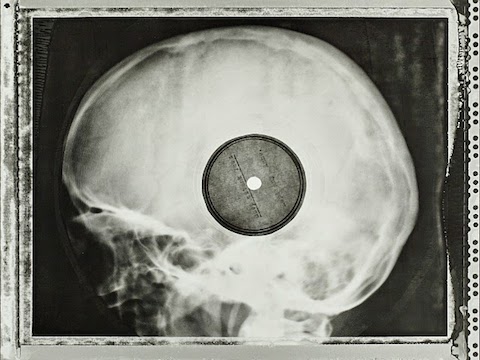
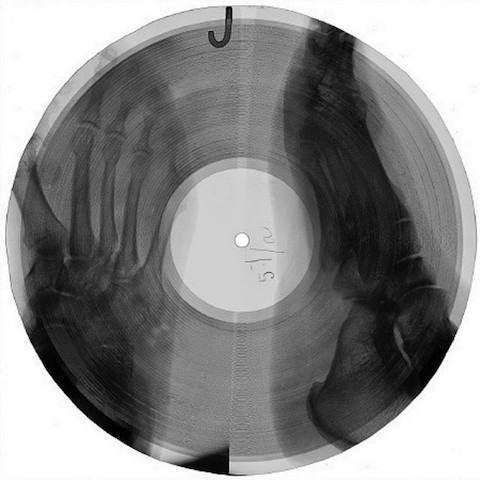
A catchy tribute to mid-century Soviet hipsters popped up a few years back in a song called “Stilyagi” by lo-fi L.A. hipsters Puro Instinct. The lyrics tell of a charismatic dude who impresses “all the girls in the neighborhood” with his “magnitizdat” and guitar. Wait, his what? His magnitizdat, man! Like samizdat, or underground press, magnitizdat—from the words for “tape recorder” and “publishing”—kept Soviet youth in the know with surreptitious recordings of pop music. Stilyagi (a post-war subculture that copied its style from Hollywood movies and American jazz and rock and roll) made and distributed contraband music in the Soviet Union. But, as an NPR piece informs us, “before the availability of the tape recorder and during the 1950s, when vinyl was scarce, ingenious Russians began recording banned bootleg jazz, boogie woogie and rock ‘n’ roll on exposed X‑ray film salvaged from hospital waste bins and archives.” See one such X‑ray “record” above, and see here the fascinating process dramatized in the first scene of a 2008 Russian musical titled, of course, Stilyagi (translated into English as “Hipsters”—the word literally means “obsessed with fashion”).

These records were called roentgenizdat (X‑ray press) or, says Sergei Khrushchev (son of Nikita), “bone music.” Author Anya von Bremzen describes them as “forbidden Western music captured on the interiors of Soviet citizens”: “They would cut the X‑ray into a crude circle with manicure scissors and use a cigarette to burn a hole. You’d have Elvis on the lungs, Duke Ellington on Aunt Masha’s brain scan….” The ghoulish makeshift discs sure look cool enough, but what did they sound like? Well, as you can hear below in the Beatles samples, a bit like old Victrola phonograph records played through tiny transistor radios on a squonky AM frequency.

Dressed in fashions copied from jazz and rockabilly albums, stilyagi learned to dance at underground nightclubs to these tinny ghosts of Western pop songs, and fought off the Komsomol—super-square Leninist youth brigades—who broke up roentgenizdat rings and tried to suppress the influence of bourgeois Western pop culture. According to Artemy Troitsky, author of Back in the USSR: The True Story of Rock in Russia, these records were also called “ribs”: “The quality was awful, but the price was low—a rouble or rouble and a half. Often these records held surprises for the buyer. Let’s say, a few seconds of American rock ’n’ roll, then a mocking voice in Russian asking: ‘So, thought you’d take a listen to the latest sounds, eh?, followed by a few choice epithets addressed to fans of stylish rhythms, then silence.”

See more images of bone music records over at Laughing Squid and Wired co-founder Kevin Kelly’s blog Street Use, and above dig some historical footage of stilyagi jitterbugging through what appears to be a kind of Soviet training film about Western influence on Soviet youth culture, produced no doubt during the Khrushchev thaw when, as Russian writer Vladimir Voinovich tells NPR, things got “a little more liberal than before.”

bonemusic2

Note: An earlier version of this post appeared on our site in 2014.

Related Content:

How to Spot a Communist by Using Literary Criticism: A 1955 Manual from the U.S. Military

Louis Armstrong Plays Historic Cold War Concerts in East Berlin & Budapest (1965)

Read the CIA’s Simple Sabotage Field Manual: A Timeless Guide to Subverting Any Organization with “Purposeful Stupidity” (1944)

Bertolt Brecht Testifies Before the House Un-American Activities Committee (1947)

How the CIA Secretly Funded Abstract Expressionism During the Cold War

Josh Jones is a writer and musician based in Durham, NC. 

Read the whole story
sarcozona
45 minutes ago
reply
Epiphyte City
Share this story
Delete

Taking Care pendants

1 Share

I’m very quick to complain online about something annoying but sometimes slower when something is good. So here’s something good.

I was reminded recently about the alarm pendants we got for our mum when she was still living at home. I’m usually prepared for, and accepting of, a few minor technical hiccups when setting up technology – it’s hard to make things work smoothly for everyone, everywhere, every time – but I was amazed at how well thought out the process of setting up these pendants was.

We ended up with two slightly different pendants, both from Taking Care.

First was their “Digital Personal Alarm”, I think, a small white pendant with a single, soft grey button that connects to a rectangular mains-powered unit that connects to Taking Care using a cellular connection (3G or 4G, I’m not sure which network(s)). If the button is pressed on the pendant or the main unit, it calls the service and someone’s friendly voice appears to ask if everything’s OK. In advance you give them the numbers of family/neighbours who they can call, or emergency services if necessary. They do a similar pendant that can detect falls, and a wrist-wearable version. It works up to 300 metres from the base station (although the wearer’s unlikely to hear the helpful voice from that distance).

We also had a “Taking Care Anywhere” pendant which is bigger but doesn’t need the main base station. It was the most magic-feeling technology I’ve seen in a while because it’s so small and simple. It can track the wearer’s location anywhere using GPS and if it detects a fall, or you squeeze the two buttons together, it calls directly to the support team and you speak to them through the pendant. I was surprised how loud and clear the voice was through the pendant.

The little white pendant has a battery that lasts for years and the larger pendant needs to be charged every couple of months by placing it on a clear, round charging unit that brightly glows useful colours.

A photo of a black pendant on a clear circular base station that's glowing blue, and a larger rectangular plastic unit with three buttons marked Power, Connect and Info, a larger button labeled Cancel, and an even larger one marked Help.
The Taking Care Anywhere pendant on its charging station, and the base station for the smaller white pendant (not pictured).

The little white pendant was included as an extra when we got the larger one – a “backup” for while the larger one is charging. In retrospect I think it would have been simpler to not use the smaller one at all, and only charge the larger one occasionally at night. This all currently costs £37.79 per month which isn’t nothing but in the scale of costs-associated-with-getting-old, it felt like money well spent.

The main thing is that it all Just Worked from initial set-up onwards. I can’t remember the exact process of setting up each device but I do remember thinking that it couldn’t have been any simpler. There was none of the expected, “Oh, hmm, I’ll try it again,” turn-it-off-and-on-again false-starts you get with so many things these days. It shouldn’t have felt remarkable but it did.

And every time we spoke to a voice at the call centre they were helpful and friendly. Thankfully we only had accidental calls – no real falls – but every time they were reassuring and not at all put out that nothing was actually wrong. Having both the hardware, its invisible software, and the human part of the service all working well was so good.

The only slightly awkward thing: It was harder to remember that the larger pendant required squeezing its buttons from both sides, which was a bit more fiddly than pressing the only button on the small white pendant.

There are many pieces of hardware associated with healthcare and being elderly that feel utilitarian and clunky, and so many services that feel stretched and only-just-working. Yes this is a pay-for service as opposed to the underfunded NHS but, still, it was as good as you hope everything should be.

And, importantly, although Mum wasn’t very enthused about the idea of a pendant initially, she ended up diligently wearing them and was reluctant to give them up when moving to a care home.

But otherwise, amazing: technology and services that work really well! Who’d have thought?!

These particular devices are apparently also known as the Chiptech GO and Chiptech Pearl so are probably available through other services in other countries too. Good work everyone.


Read comments or post one

Read the whole story
sarcozona
48 minutes ago
reply
Epiphyte City
Share this story
Delete

Alberta’s draft methane regulations appear to contradict agreement-in-principle signed 48 hours earlier

1 Share
CALGARY — AMANDA BRYANT, manager of the Pembina Institute’s oil and gas program, made the following statement in response to the release of draft new methane regulations from the Alberta Energy Regulator:“The draft methane regulations released by the...
Read the whole story
sarcozona
49 minutes ago
reply
Epiphyte City
Share this story
Delete
Next Page of Stories